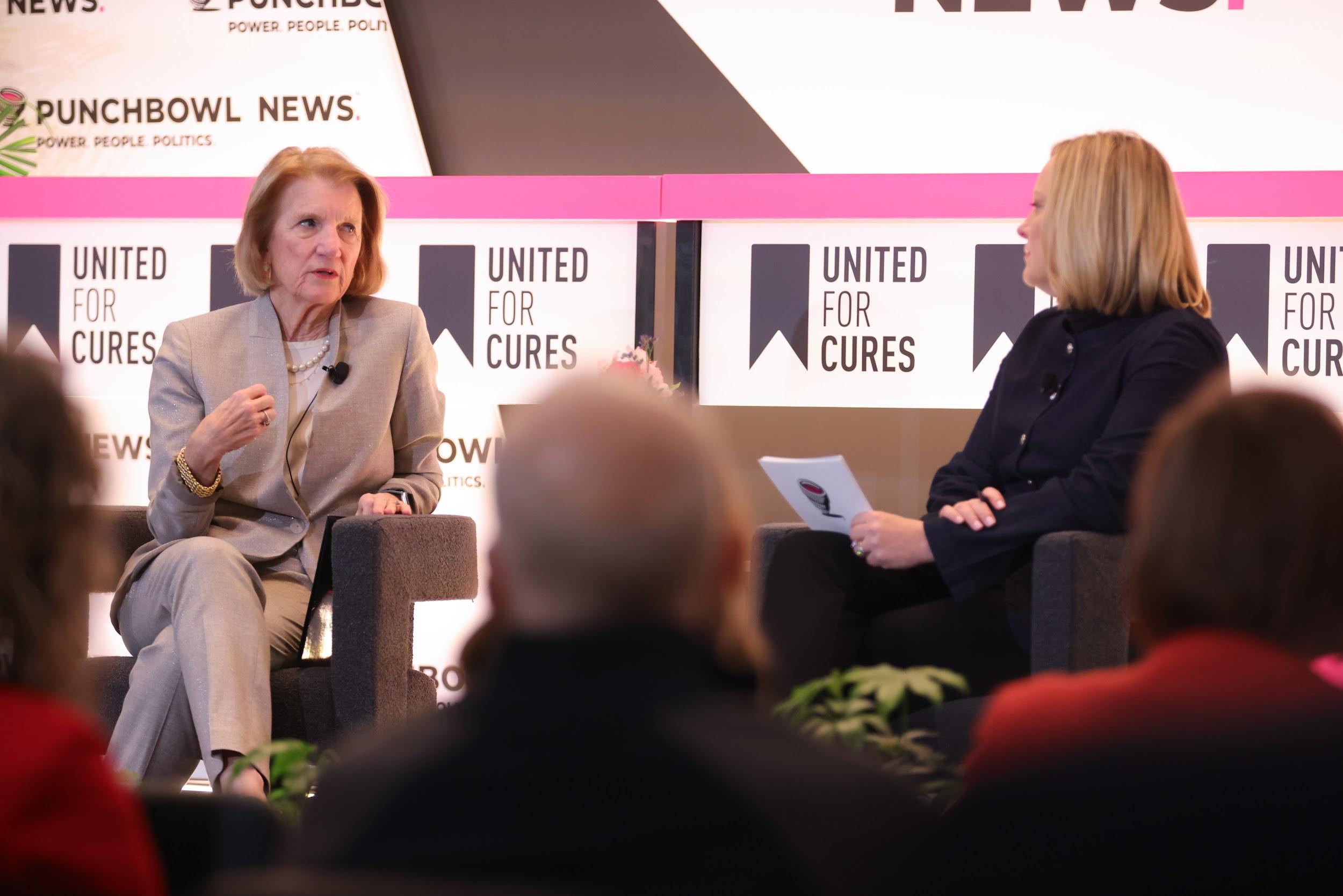
Sen. Shelley Moore Capito (R-W.Va.) said she pushed back on President Donald Trump’s proposed cuts to the National Institutes of Health, touting the funding boost she secured in the recent government funding package.
Capito joined Punchbowl News at an event Thursday focused on medical research funding and cures for chronic diseases, even sharing her family’s struggles with Alzheimer’s disease. The West Virginia Republican also discussed the impasse in Congress over funding for the Department of Homeland Security.
DHS funding. Capito said another lapse in DHS funding would affect other units that fall under that agency, including the Federal Emergency Management Agency and Coast Guard.
“It puts the Coast Guard, FEMA and others in a precarious situation with not having the certainty of their funding,” Capito said.
A stopgap Congress passed earlier this week to fund the agency for nine days will lapse on Feb. 13.
Capito cast doubt on the prospects of a deal by the deadline as Democrats hold firm on their 10 demands for reforms to federal immigration enforcement.
“Maybe they’ll extend another two weeks,” Capito said.
Medical research. Capito said the country is “rapidly” moving forward with technology, research and medicines focused on Alzheimer’s disease and other chronic diseases.
“At the same time, we have huge gaps here, because who’s going to do the detecting?” Capito said. “Who’s going to be the one that’s going to ask the tough questions?”
The West Virginia lawmaker also said she’s working to ensure rural communities, including in her state, have access to medical research facilities.
“If we’re going to solve these problems, let’s go where the problem is,” Capito said.
NIH cuts. Capito said the NIH will receive $415 million more in research funding, despite the Trump administration’s proposed cuts.
Here’s more from Capito:
Fireside chat. Russ Paulsen, COO of UsAgainstAlzheimer’s and executive director of United for Cures, said “disease does not know politics,” and that’s why medical research gains bipartisan support.
Still, Paulsen said the country is and will continue to make progress in finding cures for chronic diseases.
“The only way we make progress, though, is with funding through the NIH,” Paulsen said.
You can watch the full video here.