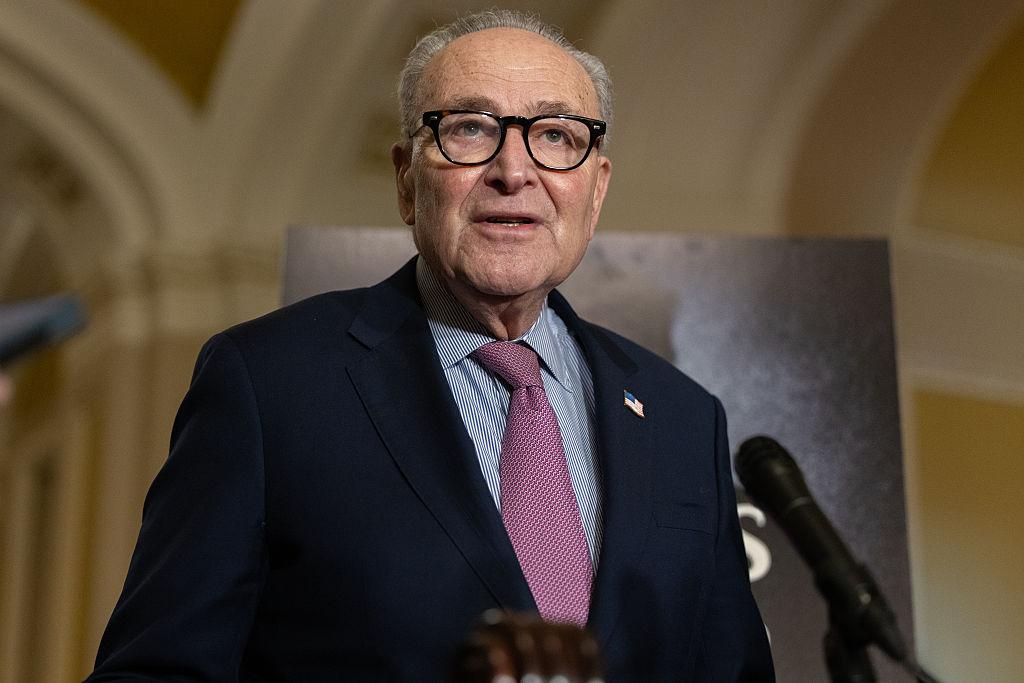
Congress is done for 2025. And what a year it’s been.
We’re focusing this morning on Senate Minority Leader Chuck Schumer. But first, it was a newsy night in the Senate on government funding.
A new hurdle. Senate leaders couldn’t reach an agreement Thursday to begin voting on a five-bill FY2026 funding package amid Democratic outrage over the White House’s move to dismantle the National Center for Atmospheric Research, a premier climate change research facility in Colorado.
The state’s Democratic senators — Michael Bennet and John Hickenlooper — are blocking the funding package until the Trump administration reverses course.
Schumer accused President Donald Trump of retaliating against Colorado over Democratic Gov. Jared Polis’ refusal to transfer a 2020 election-denier serving a prison sentence for state crimes to a federal prison in order to facilitate a presidential pardon. The incarceration of Tina Peters, a former county clerk and Trump backer convicted of election tampering, has become a fixation for the president.
“What the president did is disgusting, and our Republican colleagues ought to get him to change,” Schumer told us.
The new impasse seemed to stump Senate Majority Leader John Thune, who now has to deal with a dispute between Trump and Democrats after spending weeks trying to clear objections within his own conference.
“I’m sure there’ll be some conversations about that over the next couple of weeks. Then we’ll figure out a path forward,” Thune said. “I don’t have a good answer for that right now.”
Action on the five-bill package — Defense, Labor-HHS, Commerce-Justice-Science, Transportation-HUD and Interior — will have to wait until the new year, ahead of the Jan. 30 shutdown deadline.
Thune said it’s possible Congress would need to resort to full-year CRs for the more difficult funding bills, such as Homeland Security, State-Foreign Operations and Financial Services-General Government.
A year to forget. In his nearly-decade tenure leading Senate Democrats, Schumer has had some rough patches. None of them compare to 2025.
Progressives raged after Schumer backed a GOP-authored funding bill in March to avert a shutdown. For the first time, there were calls for Schumer to be replaced as Democratic leader.
Schumer’s job status became a litmus-test issue in Democratic primaries. Young progressives in particular said Schumer wasn’t meeting the moment in opposing Trump.
In typical Schumer fashion, he was reflective yet defiant during a lengthy interview.
“It goes with the territory,” Schumer said. “When you’re going to be leader, you have to make tough decisions which you think are good for the country, good for your caucus and good for the party. And you’re going to get criticism.”
Schumer also got a ton of heat — including from colleagues — over his refusal to endorse Zohran Mamdani in the NYC mayoral race. (Schumer declined to address his Mamdani decision.) Schumer’s approval rating among New Yorkers fell to 32%, per a November Siena poll.
Schumer isn’t in any real danger of losing his job. One Democratic senator called him “damaged goods — damaged, yes, but still good.”
We asked Schumer if he’s confident he won’t have a challenger in the leadership race following the 2026 midterms. Schumer responded that he’s “always worked hard for our caucus and tried to do the right thing,” adding: “It’s always worked out, my whole career.”
In many ways, this has been Schumer’s most trying year since taking over for the late Sen. Harry Reid in 2017.
“Every year is tough in different ways,” Schumer said in an interview in his Capitol office. “In 2022 it was so tough getting things done, sitting in a room with Joe Manchin for 10 days.”
The recovery effort. After getting clobbered in March, Schumer spent the next several months planning for the fall funding fight, instigating what would become the longest shutdown in U.S. history. That clash led to Schumer contradicting his oft-stated opposition to using funding lapses to extract policy demands.
The issue Schumer chose — health care — was politically salient to Democrats’ midterm fortunes. Yet the 43-day shutdown didn’t result in an extension of expiring Obamacare premium credits. And Schumer was slammed for the shutdown-ending deal even though he voted against it.
Schumer wouldn’t say whether he thought the shutdown was worth it. But it laid the foundation for a health care fight that exposed Republicans’ political vulnerabilities.
“We didn’t want a shutdown. I thought they’d sit down and negotiate with us. But their intransigence on the issue of health care… they know they’re drowning in it with the public,” Schumer said. “They’re paralyzed.”
The 2026 campaign. Another reflection of Schumer’s unpopularity is that more members of his caucus are endorsing challengers to the DSCC-preferred candidates in key primaries.
While that isn’t unusual in either party, the frequency has ticked up. And Democratic senators who normally don’t do this are choosing to stick their necks out.
“I am doing everything I can to win back the Senate,” Schumer said. “In each state, our north star is to do what needs to be done to win the seat, and that is what I’m doing. I’m confident that we are making the right decisions.”