


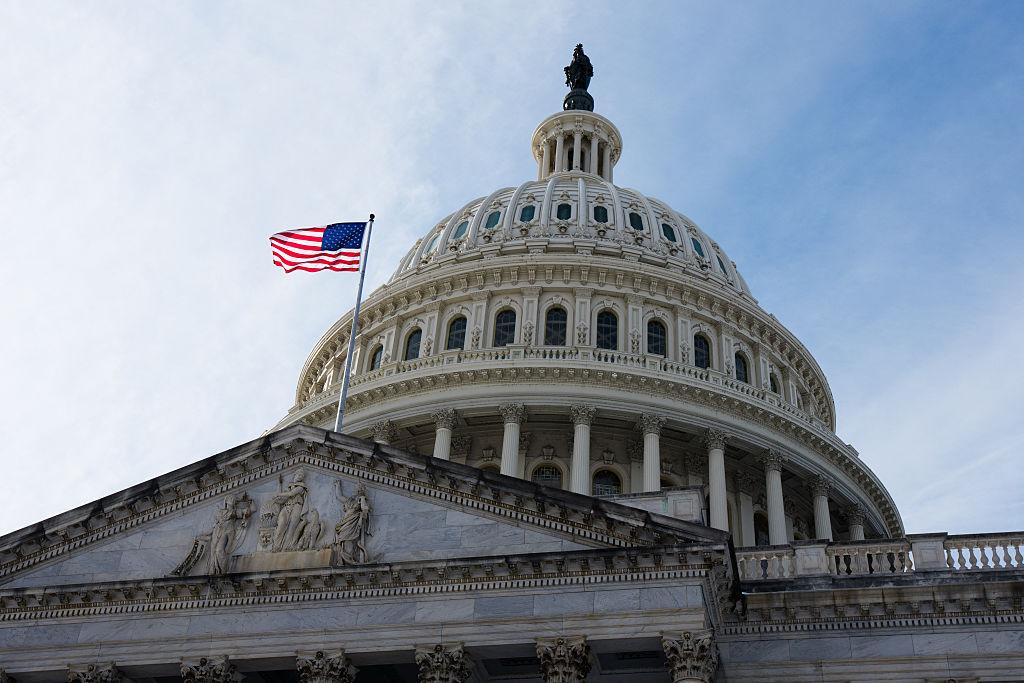
With war raging in the Middle East, the Department of Homeland Security still shut down and a storm bearing down on the East Coast — again — Congress is returning to session today amid an array of problems, priorities and deadlines. The House has postponed its first votes until Tuesday afternoon due to the storm.
Oil prices are near $100 per barrel, the Strait of Hormuz is closed and at least 13 U.S. service members have died in President Donald Trump’s war against Iran. More U.S. troops and ships are heading to the embattled region. Israel is threatening to occupy parts of Lebanon — again — while Trump is warning NATO countries of a “very bad” future if they don’t send warships to help reopen the vital Persian Gulf passage (Australia has already refused).
Trump and senior administration officials are continuing their push against the mainstream media over negative coverage of the war, even threatening broadcast licenses. This tells you how the White House thinks the political side of the conflict is going, even as U.S. and Israeli bombs and missiles obliterate target after target inside Iran.
On Capitol Hill, consider what lawmakers need to tackle in the coming weeks:
— The White House, Pentagon and congressional leaders have already begun talks about a supplemental funding bill for the Iran war. We don’t expect any request to reach Capitol Hill this week, but the two sides — Hill Republicans and the White House — are trying to figure out how to pass it.
We’ve had several sources suggest the package may carry a price tag of $100 billion or more. Lawmakers see this as potentially the last must-pass bill of the year and may try to attach their own costly proposals.
Reconciliation is probably the best option for GOP leaders because there’s no chance that Democrats would allow anything to pass without a vote on ending the conflict or reining in Trump’s freedom to operate. But any new spending would have to be offset with cuts elsewhere. This package will become a huge political flashpoint over the next few weeks.
— DHS has been shut down for 30 days, a disaster for its tens of thousands of unpaid employees and the country. Security lines are getting worse at airports nationally, although Trump on Saturday implored TSA agents to “GO TO WORK!” Sen. Markwayne Mullin (R-Okla.) has a confirmation hearing on Wednesday to be the next DHS secretary.
— Section 702 of FISA expires on April 20, but Congress is only going to be in session for a fraction of the time between now and then. The debate roiling the House and Senate is whether to pass a clean extension of the surveillance law or try to enact reforms. The White House wants a clean extension. House Republicans listen to whatever Trump wants, although this is a unique cross-partisan issue.
— Speaker Mike Johnson is going to have a tremendously difficult time conducting any business over the next few weeks — again. Several hardline Republicans say they won’t let Johnson pass anything unless there’s progress on the SAVE America Act. They’re taking the same line on Senate-passed bills.
SAVE Act marathon. As soon as Tuesday, the Senate will kick off an unusual and messy floor process on the SAVE America Act that’s likely to last several days. It’s virtually certain to fail.
But Senate Republicans are eager to shift the narrative on SAVE, which has been marred by GOP infighting on a bill they overwhelmingly support. Senate GOP leaders hope that the chaotic debate — and the procedural hijinks it’ll allow Democrats to employ — will further demonstrate just how infeasible the proposed solution, a “talking filibuster,” really is.
Sen. Mike Lee (R-Utah) and his allies are determined to drag out the debate anyway. This will put immense pressure on Senate Majority Leader John Thune, who’ll eventually need to end the process by setting up a 60-vote threshold that Republicans won’t be able to clear.
Here’s how it’ll work.
First, the Senate will vote to proceed to the House version of the SAVE America Act. This is a simple-majority vote that may require Vice President JD Vance to break a 50-50 tie if Sens. Mitch McConnell (R-Ky.) and Lisa Murkowski (R-Alaska) vote “no.” Sen. Thom Tillis (R-N.C.) will be a “no.”
Rather than immediately filing cloture, as is customary, Thune will kick off an extended debate that will force senators to stay close to the floor for hours on end. Democrats are likely to make this as painful as possible, including using live quorum calls. Democrats are also expected to force an Iran war powers vote this week, which would interrupt the SAVE Act debate because it’s privileged.
Senate Minority Leader Chuck Schumer told reporters on Sunday that the SAVE America Act was one of the “most despicable” bills he’s ever seen, asserting it’s an attempt by Trump to “steal” the midterms.
Thune will also set up votes on amendments — either individually or all at once — on the changes Trump demanded, including on transgender issues and mail-in ballots, led by Sen. Eric Schmitt (R-Mo.). These will fail because they’ll require 60 votes. The mail-in ballot issue will split Republicans, many of whom oppose Trump’s push to significantly curtail their use.
So how long will this all last? That’s up to the bill’s most fervent supporters, who can try to block Thune from cutting off debate and move to a certain-to-fail vote on changing Senate rules.