

October 1, 2025



PRESENTED BY

THE TOP
The government is shut down. Now what?
Happy Wednesday morning.
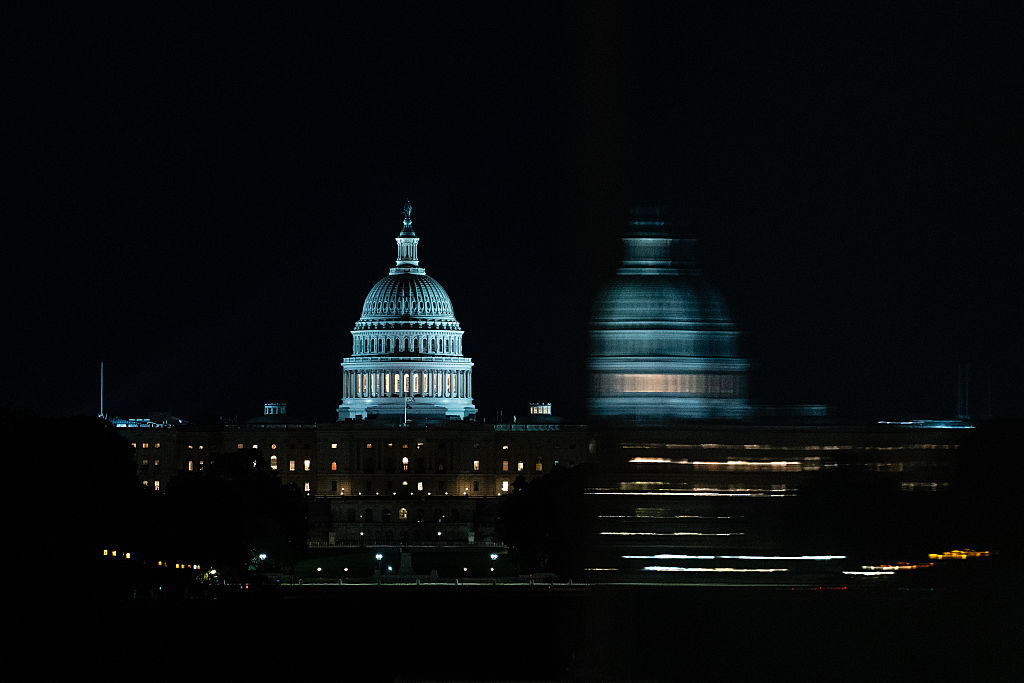
The federal government shut down at 12:01 a.m. this morning. It’s the first government shutdown since 2019.
We’ll reiterate that such shutdowns are harmful, counter-productive and a major detriment to the country. The party looking to force a policy change via a shutdown rarely gets what it wants.
We know that from the Republicans’ 2013 shutdown seeking to repeal Obamacare; the Democrats’ 2018 shutdown over DACA; and the 2018-2019 shutdown, during which Republicans tried to secure money for President Donald Trump’s border wall. All of these failed.
Hundreds of thousands of federal workers are going to be furloughed, a real-world impact for families nationwide. The remainder of “essential employees” will work without getting paid.
Active-duty military service members could miss a paycheck if this drags on, although Pentagon brass may redirect previously approved funds to cover salaries. Trump and OMB Director Russ Vought could implement mass layoffs or program revisions, igniting even more fights with Democrats.
The House is out of town. Senate leaders aren’t negotiating. Trump is openly mocking Senate Minority Leader Chuck Schumer and House Minority Leader Hakeem Jeffries on social media. The chances of a quick resolution to the impasse are low — unless one side abruptly folds.
On Tuesday, the Senate again voted down two stopgap funding bills designed to avert a shutdown. Democrats blocked Republicans’ clean Nov. 21 CR. Republicans rejected Democrats’ bill that would extend enhanced Obamacare subsidies, roll back Medicaid cuts and stop Trump from enacting rescissions.
In an interesting development, two additional Senate Democrats voted for the GOP CR on Tuesday night, bringing that total to three. Sens. Catherine Cortez Masto (D-Nev.) and Angus King (I-Maine) crossed the aisle to vote yes, along with Sen. John Fetterman (D-Pa.). Both funding bills will come back up today.
One of the most important factors to look at during a shutdown isn’t just how you get into one, but how you plan to get out. And that’s where we want to focus this morning — what to expect next, and what might shift the incentives or momentum in this process.
Moderates crumble. Schumer has been able to maintain his hardline posture largely because he’s gotten continued backing from moderates in his caucus, as well as retiring Democrats. That unity has bolstered Schumer’s position.
But with two new Democratic defections, Senate Majority Leader John Thune is betting that pressure will continue to build on those moderates to cave the longer the shutdown drags on. Thune needs at least eight Democrats to fold to get to the 60-vote threshold since GOP Sen. Rand Paul (Ky.) will be a no on anything.
Thune could also promise votes on various Obamacare-related proposals or commit to bipartisan negotiations on the issue as a way to win over more Democrats, although this would be seen as a cave by the left.
At a press conference Tuesday night, Schumer declined to say whether he can guarantee that there won’t ever be 60 votes for the GOP bill. Schumer was very careful not to box himself in.
“Our guarantee is to the American people that we’re gonna fight as hard as we can for their health care,” Schumer said. That’s a far cry from keeping the government shut down until Democrats get what they want.
Trump and Vought make it too painful. During the last 24 hours, Trump has made dire threats about the consequences of a shutdown.
On Tuesday, Trump mused about using the shutdown as a pretext to take “irreversible” actions such as benefit cuts, “cutting programs that [Democrats] like” and “trimming the budget to a level that you couldn’t do any other way.” Trump also said “a lot of good can come from shutdowns.”
This is Trump saying he’ll use the shutdown as an opportunity to implement massive changes to the government without congressional approval. It has the potential to be very painful for Democrats.
Up until this point, Democrats have dismissed Vought’s threats — including layoffs outlined in an OMB memo — as an intimidation tactic.
But if Trump and Vought follow through on some of their more dramatic threats, that could be enough to push Democrats to fold.
Public backlash. Nothing lights a fire under lawmakers like constituent anger. And Americans dislike their government, but they especially dislike it when the government is shut down and they’re still paying taxes.
Think about all the unpleasant things that can occur during a shutdown. National parks close. People have trouble signing up for Social Security or Medicare. Government services are interrupted. Constituents try to call agencies and no one picks up. Permits are slowed. Flood insurance — which also expired on Tuesday — languishes.
The Bureau of Labor Statistics has already said it won’t release jobs data this Friday. Will this rattle markets? Would a market swoon convince lawmakers to relent? We know that the president is incredibly focused on markets.
A long shutdown. One critical danger of a shutdown for both parties is the missed paychecks for federal workers. Some federal workers will start missing paychecks by next week.
Paydays for military service members generally fall on the 1st and 15th. That means the next payday is in jeopardy if the crisis drags on. The Defense Department signaled over the weekend that it could dip into that $150 billion included in the One Big Beautiful Bill Act if money runs out. Democrats would be furious over that move.
Republicans decide to negotiate. We see this as the least likely scenario. But what if Trump decides that he actually wants a deal on enhanced Obamacare subsidies and pushes Thune and Speaker Mike Johnson to agree to tie it to government funding?
There are tons of implications to such a move, yet Trump is unpredictable. He’s also obsessed with polls, and he’s shown vulnerability on economic issues. There’s also at least some truth in the Democratic assessment that Trump is open to a deal while GOP congressional leaders aren’t. What if Trump decides that he wants an agreement to re-open the government and isn’t too worried about what Hill leaders say?
HAPPENING TODAY: National Economic Council Director Kevin Hassett will be our guest on Fly Out Day.
— Jake Sherman, Andrew Desiderio and John Bresnahan
Join us in Pittsburgh or on the livestream on Oct. 14 at 9 a.m. ET for a conversation with Sen. Dave McCormick (R-Pa.). We’ll sit down with McCormick to discuss news of the day, retirement and economic security. RSVP here!


THE SENATE
Thune plays hardball as shutdown begins
Senate Majority Leader John Thune’s plan to reopen the federal government is taking shape: Keep forcing votes on the House-passed funding bill until Democrats give in.
Three Senate Democrats are now on record backing the GOP’s Nov. 21 stopgap funding measure: Sens. John Fetterman (Pa.), Catherine Cortez Masto (Nev.) and Angus King (I-Maine).
There are other Senate Democrats considering jumping ship. Thune needs five more to cave to pass the seven-week CR.
And for any Democrats hoping a shutdown would change his posture, Thune doubled down on his declaration that negotiations on Democrats’ chief ask — an extension of Obamacare enhanced premium tax credits — won’t begin until the government is reopened.
“Tonight was evidence that there is some movement there, and we’ll allow our Democrat colleagues to have additional opportunities to vote… to open [the government] back up,” Thune told us.
The Senate will vote again today on both the House-passed CR and Democrats’ Oct. 31 counter-proposal. Both are procedural votes set at 60. The Senate will also hold a procedural vote on a package of more than 100 of President Donald Trump’s nominees.
There won’t be any Senate action on Thursday in observance of Yom Kippur. The Senate is expected to be in session on Friday and possibly Saturday for votes on government funding, as well as the nominations package.
Dems in a bind. Senate Minority Leader Chuck Schumer said Republicans are “feeling the heat” on the Obamacare subsidies. That may be true, as many of them want to cut a deal that would head off massive premium hikes. And Schumer said Democrats are “representing our constituents in the best way possible by insisting that Republicans come to the table.”
Yet there’s little evidence that Republicans are being forced to tie the issue to government funding.
“We need to keep the government open. You can talk about whatever else they want to talk about after that,” Thune said. “Anything that’s going to be done is going to have to be done with significant reforms. Like I said, we’re willing to have that conversation.”
It’s unclear if any additional Senate Democrats will vote to advance the House-passed CR today. Sens. Jeanne Shaheen (D-N.H.) and Gary Peters (D-Mich.), who are retiring, are among those worth watching.
“I think we need to get a resolution, and what’s been lacking is a commitment from the president,” Shaheen said.
Schumer’s leverage significantly diminishes if more Democrats vote for the GOP CR. There’ll be intense pressure to fold as the shutdown impacts become more pronounced.
“I voted to avoid a costly shutdown that would harm Nevada and hand power to a reckless administration. We should be working on bipartisan solutions to this health care crisis, but that doesn’t mean we should be” shutting down the government, Cortez Masto told reporters.
The stakes here are enormously high for Schumer. He was harshly criticized by progressives over his handling of the March funding fight. This time, Schumer has aligned closely with House Minority Leader Hakeem Jeffries. Jeffries only lost one House Democrat — Rep. Jared Golden (Maine) — on the GOP CR proposal. Schumer has already lost three.
Schumer insisted Tuesday night that he still has the upper hand in the showdown with Thune and Trump.
“What gives us the ability to win this argument with the American people is, we’re standing for what they want with health care, and [Republicans] are not,” Schumer told us.
— Andrew Desiderio, Max Cohen, Samantha Handler and John Bresnahan
REDISTRICTING WARS
House Dems near redistricting win in Utah
The Utah legislature is set to approve a congressional map that could create as many as two pickup opportunities for Democrats in a rare win in the redistricting wars.
Utah’s congressional map currently has four solid GOP districts. But the Beehive State is required by a court to implement a new map that follows certain anti-gerrymandering criteria that citizens enshrined into law via ballot initiative.
The GOP-controlled legislature is currently considering a half dozen redistricting proposals and it is likely to select Option C, according to people familiar with the plans.
That map creates two deep-red districts in the northern and the southwestern portions of the state. Salt Lake County is split between the 2nd and the 3rd Districts. That’s where Democrats see opportunity.
President Donald Trump would have carried the 2nd District, which spans the western half of Salt Lake County to the Nevada border, by roughly seven points in 2024. That’s tough for Democrats, but not impossible.
The 3rd District, which spans from the eastern half of Salt Lake County down to the southeastern border of the state, would be even more competitive. Trump would have won it by roughly two points last November.
Former Rep. Ben McAdams (D-Utah) is seriously considering another run, people with knowledge of his plans told us. McAdams won a GOP-leaning district in Trump’s first midterm in 2018 but then lost in 2020 to now-Rep. Burgess Owens. As a former Salt Lake County mayor, McAdams would be a formidable recruit in either district.
The potential map could make some of Utah’s incumbents uncomfortable. Based on their current districts and homes, GOP Reps. Blake Moore and Celeste Maloy would be natural fits for the two deep red seats. That could leave Owens and freshman Rep. Mike Kennedy with one very competitive seat and one potentially competitive seat.
Of course, none of this is final. The Utah legislature may change course and go with a different map when it selects one on Oct. 6. The judge will have to make the final decision and she could reject whatever the legislature proposes. Republicans could try to stall with legal challenges and kick this process into 2028.
But Democrats are searching for any chance to cancel out some of the Republicans’ nationwide redistricting push. Right now, Utah is quickly emerging as their strongest opportunity to get a more favorable congressional map in place for the midterms.
Trial in Texas. A federal three-judge panel will begin hearing a challenge Wednesday to the congressional map that Texas’ Republicans passed this summer. The court will rule on whether the map can be used in 2026 or if it is a racial gerrymander and thus unconstitutional. This is one of Democrats’ last lines of defense.
– Ally Mutnick
PRESENTED BY HCA HEALTHCARE

After Poppy’s parents searched the country for answers and a diagnosis, HCA Healthcare showed up to deliver the complex care she needed, close to home.
THE AIRWAVES
Senate Dems go after GOP incumbents on shutdown
News: The top Senate Democratic super PAC is launching a $1 million ad campaign attacking GOP Sens. Susan Collins (Maine) and Dan Sullivan (Alaska) over rising prices and the government shutdown.
The ads are being run by two Democratic groups linked to Senate Majority PAC: Duty & Honor and Majority Forward.
“Dan Sullivan voted for the tariffs driving up costs,” the narrator says in the Alaska ad. “Dan Sullivan voted to cut Medicaid and raise health care costs too — he’s even willing to shut down the government to do it.”
The ad running against Collins in Maine follows a similar script.
“Next time you see those prices going up, call Susan Collins and tell her to stop the tariffs, stop cutting Medicaid, stop raising costs,” the narrator says in the Maine spot.
The ads are running on YouTube, connected TV and digital streaming platforms.
— Max Cohen
AND THERE’S MORE
Nom news: The White House withdrew two beleaguered nominees from Senate consideration last night, according to people familiar with the decisions.
Brian Quintenz, nominated to serve as chair of the Commodity Futures Trading Commission, was withdrawn after facing opposition from crypto leaders Tyler and Cameron Winklevoss. EJ Antoni, nominated to lead the Bureau of Labor Statistics, was also withdrawn after facing Senate resistance and broad skepticism from establishment economists.
Money Game. James Talarico, the Democratic state legislator running for the Senate in Texas, raised $6.2 million in the first three weeks of his campaign.
Democratic state Rep. Manny Rutinel has surpassed $2 million raised in his campaign for Colorado’s 8th District.
Former Navy SEAL Matt Maasdam raised more than $600,000 in the third quarter for his bid against Rep. Tom Barrett (R-Mich.), per Maasdam’s campaign.
– Brendan Pedersen, Jake Sherman, Max Cohen and Ally Mutnick


Presented by Apollo Global Management

America’s economic growth requires bold investment. Apollo is investing in American companies to help them hire, grow and build for the road ahead. Learn more.

Crucial Capitol Hill news AM, Midday, and PM—5 times a week
Join a community of some of the most powerful people in Washington and beyond. Exclusive newsmaker events, parties, in-person and virtual briefings and more.
Subscribe to Premium
The Canvass Year-End Report
And what senior aides and downtown figures believe will happen in 2023.
Check it outEvery single issue of Punchbowl News published, all in one place
Visit the archive
Presented by Apollo Global Management
America’s economic growth requires bold investment. Apollo is investing in American companies to help them hire, grow and build for the road ahead. Learn more.