

November 25, 2025


PRESENTED BY

THE TOP
Trump’s perilous path on health care
Happy Tuesday morning.
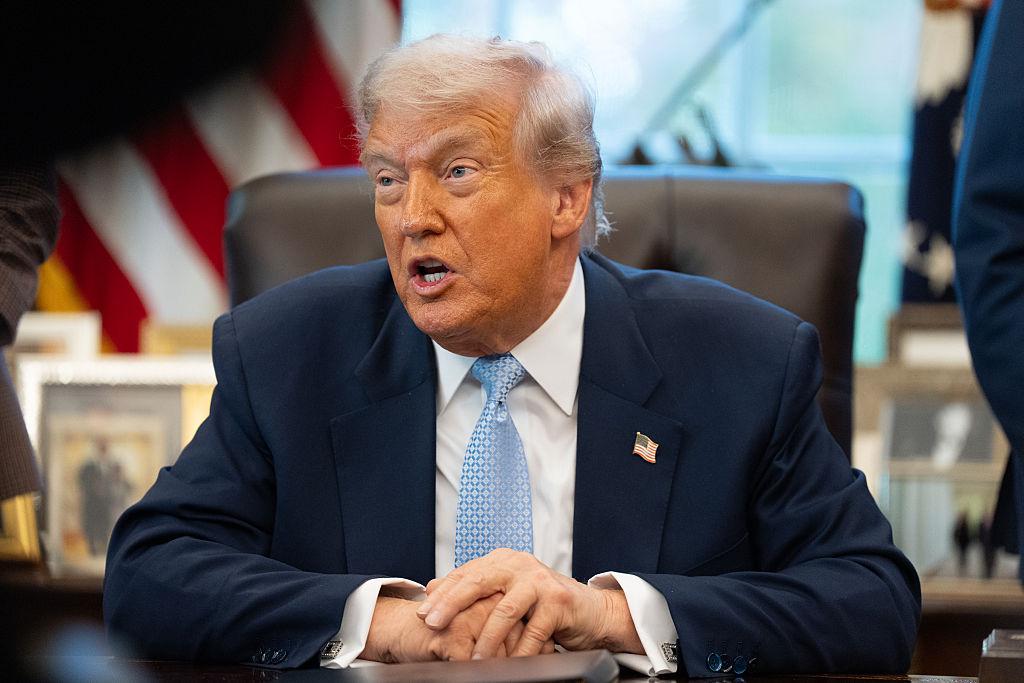
President Donald Trump appeared ready to roll out a health care proposal intended to address an imminent Obamacare subsidy cliff — a sign the White House is eager to avoid the political blowback that would likely result from a sharp rise in health care premiums.
But the White House’s decision to press pause on the rollout Monday just as quickly as they floated it underscores how difficult it’ll be, especially at this late stage, to get a bill over the finish line.
The fact that the White House was even seriously working on a plan caught Hill Republicans by surprise when news of it leaked on Sunday. By Monday morning, the White House was preparing to unveil the proposal — before eventually backtracking amid resistance from conservatives and a general sense among Republicans that the White House was mismanaging the issue.
It’s now unclear when — or even whether — the plan could see the light of day.
The proposal, detailed below, amounts to a pared-back short-term extension of the Obamacare enhanced premium tax credits, the issue Democrats latched onto as they forced the longest government shutdown in history. During that shutdown, Republican leaders in both chambers said repeatedly that they didn’t support extending the subsidies despite modest support within the GOP rank-and-file.
Our friends at the WSJ report that Speaker Mike Johnson called the White House to warn them that most Republicans oppose an extension.
The plan, though, mirrors what some GOP senators, most notably Sen. Katie Britt (R-Ala.), were privately pitching to Trump last week as a way to buy time for a larger health care fix and, simultaneously, prevent politically damaging premium hikes in the near-term, as we scooped.
Democratic Sens. Jeanne Shaheen (N.H.), Jacky Rosen (Nev.) and Maggie Hassan (N.H.) — all of whom voted to end the shutdown — issued statements welcoming Trump’s push.
Shaheen, for example, called it “a serious proposal to begin negotiations” and expressed optimism that a bipartisan deal can be reached.
Republicans were a lot less excited about the proposal, concerned about the overall policy and, perhaps more critically, whether it protects the Hyde Amendment, which prohibits taxpayer money from being spent on abortion.
But there’s precious little time — and lots of uncertainty about whether there’d be enough support within both parties to get something done.
New phase. As part of the deal that ended the shutdown, Senate Majority Leader John Thune promised to hold a vote on the Obamacare subsidies by Dec. 12. That’ll be just 11 days from next Monday, when both chambers return from the Thanksgiving recess.
Lawmakers from both parties have long said Trump’s involvement is critical given his tight grip on Senate and House Republicans, so it’s no surprise that Democrats who want to extend the subsidies are feeling optimistic.
But Trump’s apparent pullback on Monday shows how difficult even a pared-back Obamacare extension is for Republicans to swallow.
There’s always been a distinct possibility that Thune’s promise of a vote simply becomes a messaging exercise for Democrats whereby they all vote for a clean extension of the subsidies, it falls well short of 60 votes, and everyone moves on with their lives.
The alternative, of course, is a compromise product that extends the Obamacare subsidies in some form. A key unknown variable here is what exactly the coalition looks like to win 60 votes. Is it nearly every Democrat and a handful of Republicans? Or vice-versa? Or is it more like 30-40 senators from each party?
If the starting point is a Trump-backed bill, the vast majority of the Senate GOP Conference will likely support it. The question is whether there are enough Democrats to supply 60-plus votes. Last week, top Senate Democrats were publicly casting doubt on the prospects of an Obamacare extension deal, while many progressives probably won’t vote for anything that isn’t a clean extension.
It’ll be a similar calculation in the House, where Johnson would likely need a good chunk of Democratic votes to make up for the Republicans who will never vote for an Obamacare extension even with Trump’s prodding.
That dynamic would be tricky territory for Johnson. Republican speakers of the House are sensitive to criticism that they are relying on Democrats to pass legislation. Johnson also likes to say that his job is to build consensus among Republicans.
The proposal. The White House was floating policies that would extend the expiring subsidies for two years but add guardrails, including capping eligibility at incomes of 700% of the federal poverty level.
Enrollees would also owe a minimum premium payment, and there would be an option to receive part of the credit in an HSA if enrollees buy lower-premium options on the ACA exchange.
The income cap is in line with what a bipartisan Senate group was discussing, though it falls short of letting the subsidies expire, which is what conservatives would prefer. But pitching an Obamacare credits extension without much input from congressional Republicans rankled many GOP lawmakers.
What wasn’t in the proposal was also a concern for some Republicans. Anti-abortion groups and their GOP allies have been demanding Hyde amendment language be added to any fix on Obamacare subsidies. Democrats won’t go for that.
— Andrew Desiderio and Samantha Handler
Next week on Thursday, Dec. 4 at 9 a.m. ET, Punchbowl News Senior Congressional Reporter Andrew Desiderio will sit down with Senate Appropriations Committee Chair Susan Collins (R-Maine). The two will discuss the news of the day and the future of Alzheimer’s disease diagnosis and treatment. RSVP here!


THE VOLUNTEER STATE
The arms race to win big in Tennessee
Both parties are pouring money into a Tennessee special election for a deep red seat out of hope — or fear — that weird timing and turnout could lead to unpredictable results.
The contest pits Democratic state Rep. Aftyn Behn against Republican Army veteran Matt Van Epps in a district that stretches from Kentucky down to the Alabama border.
President Donald Trump, who has endorsed Van Epps, carried that district by 22 points in 2024. It should not even be competitive enough to warrant spending.
But the date of the election, Dec. 2, is just days after Thanksgiving. And thanks to the last redistricting in 2021, the seat now includes a chunk of the blue city of Nashville, which could open up a very narrow path for Democrats.
“I think there is a chance that if Republicans stay home, and Democrats come out in strong numbers, maybe they could get really lucky,” Rep. John Rose (R-Tenn.) said. “It’s purely a turnout thing.”
Most Republicans feel confident they will win the race. Their ad spending is to remind conservative voters that the election is going on and to keep the margin from being tight enough that Democrats can claim a convincing pyrrhic victory.
And Behn has significantly outraised Van Epps in the final stretch.
“It’s a Tuesday-after-Thanksgiving election,” NRCC Chair Richard Hudson said. “Most voters don’t have any idea there’s an election. Thank goodness Kamala Harris showed up because now all the Republicans know.”
The Kamala factor. Behn has worked hard to keep the race local. That got tougher last week.
Former Vice President Kamala Harris visited Nashville last Tuesday as part of her book tour, and she also attended a Tennessee Democratic Party event meant to get out the vote for the special election. Behn also went to the event, but the two never appeared together.
Republicans seized on the appearance of Harris, who only won 38% of the vote in the district in 2024. And even some Democrats were confused at the event.
“That was stupid,” said Rep. Steve Cohen, the lone Democrat in the state’s congressional delegation. “I don’t think it was a good idea.”
It would be better, Cohen said, “if they had someone from Tennessee come in or somebody moderate.”
On the airwaves. Van Epps and a constellation of Republican outside groups have spent $2.7 million on ads since he won the October primary, per AdImpact. That includes MAGA Inc., a pro-Trump super PAC.
The spots lean heavily on Behn’s days as an activist, using footage of her vowing to protect trans children and protesting ICE.
Behn and Democratic groups have spent $2 million on ads since the primary. House Majority PAC, a group with close ties to House Democratic leadership, just jumped into the contest.
HMP’s ad focuses on economic issues: “Van Epps wants three things: cuts to healthcare benefits, more tariffs driving up costs, tax breaks for billionaires. Aftyn Behn wants one thing: to lower your costs.”
Behn has slammed Republicans for Medicaid cuts that she says hurt rural Tennessee. She has also needled Republicans in ads over the Jeffrey Epstein files.
– Ally Mutnick


Tech: Here’s the House plan to protect kids online. Plus GAIN news
News: We have scoops on two important fronts today: kids safety legislation and GAIN AI.
Scoop No. 1: The House Energy and Commerce Committee plans to unveil its long-awaited proposal to protect kids and teens online ahead of a hearing on Dec. 2.
The 19 bills will include measures on social media design, video games, raising the minimum age to join social media, app store regulation and chatbots.
The lynchpin — and lightning rod — of the package is the Kids Online Safety Act. That bill requires social media platforms to put in place certain safety features by default for minors.
KOSA has been a long-term goal of parents’ groups and lawmakers in both parties. Many, however, say they’ll only support a version that also imposes legal responsibilities on the platforms to address certain harms. A bill that includes “duty of care” is currently filibuster-proof in the Senate.
The House Energy and Commerce GOP proposal replaces that approach with one requiring companies to implement procedures to mitigate harm to young users from things like violence, scams, obscenity, gambling, drugs and alcohol.
Panel leaders say the Senate language too closely resembles policies that courts have struck down as unconstitutional. They are depicting their version of KOSA as better for kids because it will survive judicial scrutiny, and highlighting the full spectrum of bills under consideration.
Privacy and chatbots. Another major pillar of the E&C package would extend current privacy rules for kids online to teens.
The measure has previously been introduced, but the latest version reins in popular platforms that wilfully ignore evidence of kids who use the services.
The hearing will also include a measure to stop kids and teens under age 16 from creating social media accounts, plus a national age verification for viewing sexually explicit websites. Another bill would mandate that chatbots regularly tell minors they’re not talking to humans or getting professional advice.
In addition, the members of the committee will consider forcing Apple and Google to verify smartphone users’ ages and will look at a separate measure to give parents a say over their children’s app downloads.
Another bill would give parents a way to limit their kids’ communications with other players on social gaming.
Scoop No. 2: House Foreign Affairs Committee Chair Brian Mast (R-Fla.) has proposed changes to the GAIN AI Act as part of negotiations to include it in the National Defense Authorization Act. House GOP leadership opposed inserting the original language in the defense bill.
Under Mast’s version, Congress would have 30 days to block an export license for artificial intelligence chips going to China, Russia, North Korea or Iran. The clock would start with a Commerce Department notification of its plan to issue a license and certification that the exports won’t hurt the domestic chips supply.
We’re told Sen. Jim Banks (R-Ind.), the GAIN AI Act’s sponsor, is supportive of Mast’s changes. There are strong similarities between the two bills. The original approach would have given U.S. customers right-of-first-refusal over AI chips going to adversarial countries.
“Chairman Mast believes Congressional oversight over selling advanced chips to China is crucial,” HFAC Communications Director Haris Alic said.
— Ben Brody, Diego Areas Munhoz and Jake Sherman
PRESENTED BY META

DEFENSE
Is DOD targeting Kelly a political gift?
President Donald Trump’s administration may have handed Sen. Mark Kelly (D-Ariz.) the biggest in-kind contribution of his career.
The Pentagon announced Monday it is investigating Kelly stemming from his participation in a video with five fellow Democratic lawmakers that called on service members to refuse to follow “unlawful orders.”
As a retired Navy captain, Kelly could be recalled to active duty for court-martial proceedings under federal law. In a statement, he said, “If this is meant to intimidate me and other members of Congress from doing our jobs and holding this administration accountable, it won’t work.”
Kelly was a finalist for vice president under Kamala Harris’ presidential bid — and is thought to have potential 2028 aspirations of his own.
A fundraising juggernaut, Kelly raised $86.2 million for his 2022 reelection bid. But a high-profile clash with the administration is sure to further juice contributions from a Democratic base hungry for politicians more aggressively standing up to Trump.
Defense Secretary Pete Hegseth wrote on X that Kelly’s “conduct brings discredit upon the armed forces and will be addressed appropriately.” The post will almost certainly raise questions of so-called unlawful command influence over the military judicial process.
Hegseth also downgraded Kelly to the rank of “commander” in his statement. Kelly retired from the Navy as a captain in 2011, according to a copy of his service record provided by the military branch.
The other veterans in the video, Senate Minority Leader Chuck Schumer, Sen. Chris Murphy (D-Conn.) and Sen. Ruben Gallego (D-Ariz.) all leapt to Kelly’s defense in the aftermath of the Pentagon’s announcement.
Liz Lyons, director of public affairs at the CIA, went after another lawmaker in the video, former intelligence analyst turned Sen. Elissa Slotkin (D-Mich.), in an unusual statement saying “former officers should remember the oath and commitment they make while serving at CIA, and conduct themselves accordingly — even long after they leave” and that Slotkin was among “the ranks of disgraced former intelligence officers.”
Slotkin has defended her comments saying, “I won’t back down, and I won’t let the President put words in my mouth.” She received a bomb threat and now receives 24/7 Capitol Police protection after Trump’s threats last week.
— Briana Reilly and Anthony Adragna
… AND THERE’S MORE
The Campaign. The EU-US Forum, a group run by former Trump administration official Matt Mowers, has a new ad up about the European Union regulating American companies. The spot, which is running in D.C., ends with this: “We won independence from Europe once. We’re not letting Brussels take control today.”
Watch the spot here.
Downtown Download. Manatt, Phelps & Phillips has signed the following cities: Everett, Wash.; Fremont, Calif.; Phoenix; Redmond, Wash.; Sacramento; San Jose, Calif.; and Seattle.
Scoop: Sen. Lindsey Graham (R-S.C.) plans to hold a hearing next week focused on Russia’s kidnapping of Ukrainian children, according to multiple sources familiar with the matter.
The hearing would notably take place in the Senate Appropriations subcommittee that handles funding for the State Department and foreign operations, which Graham chairs.
Graham has been pushing legislation that would designate Russia as a state sponsor of terrorism if the over 19,000 Ukrainian children who have been abducted since the start of the war aren’t returned.
— Jake Sherman and Andrew Desiderio
PRESENTED BY META



Enter a new era of Punchbowl News with exclusive merch from our swag store. From t-shirts and quarter-zips to mugs, hats and even pickleball paddles, we’ve got you covered.

Crucial Capitol Hill news AM, Midday, and PM—5 times a week
Join a community of some of the most powerful people in Washington and beyond. Exclusive newsmaker events, parties, in-person and virtual briefings and more.
Subscribe to Premium
Special Projects
Explore our deep dives into the issues that matter the most today and will shape tomorrow's future, with expert reporting that goes beyond the headlines and into the heart of the Capitol.
Check it outEvery single issue of Punchbowl News published, all in one place
Visit the archive
Go deeper with a Premium+ membership to Defense, Tech, Vault OR all three. Access monthly briefings with reporters, paywalled content, breaking news texts in your coverage area and more, bringing you closer to the action.