

December 12, 2025



PRESENTED BY

THE TOP
The Republican redistricting flop
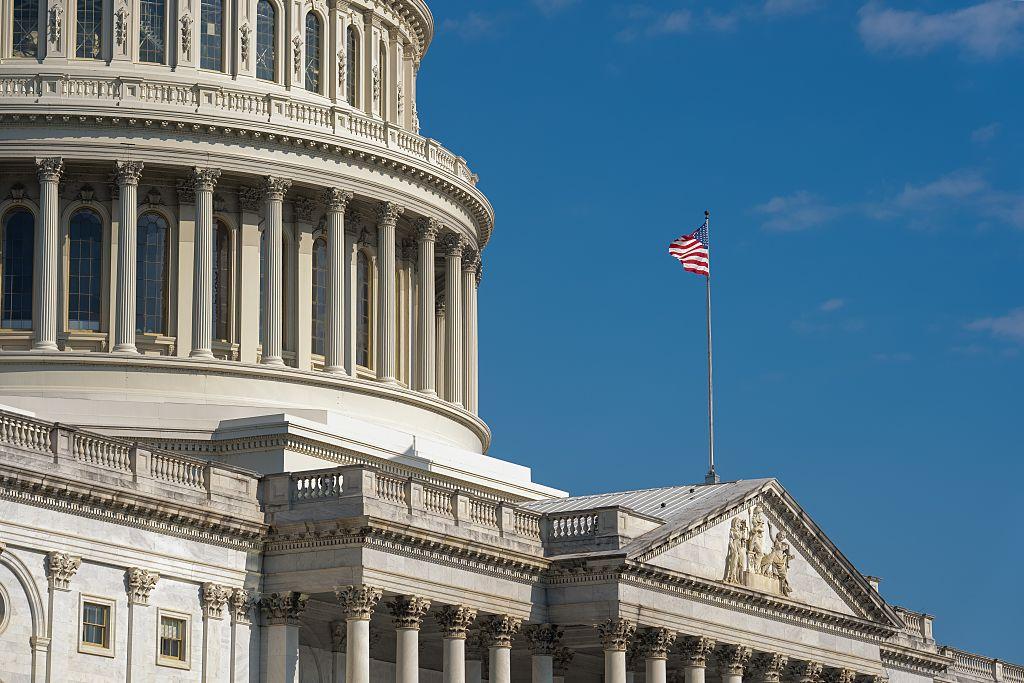
Happy Friday morning.
If House Republicans were counting on redistricting to save their endangered majority, it isn’t working.
The Indiana Senate resoundingly crushed President Donald Trump’s months-long push to force a mid-decade redraw of the Hoosier State’s congressional map. The 19-31 vote spared Democratic Reps. André Carson and Frank Mrvan and denied House Republicans two new red seats.
“I just don’t think they understand the ramifications nationally,” Rep. Marlin Stutzman (R-Ind.) said of his state’s legislators, adding: “Shame on us.”
This loss is the latest in a series of stinging redistricting defeats and setbacks for Republicans in Ohio, Utah, Kansas and potentially Missouri. And a big GOP win in Texas is likely to be canceled out by Democrats’ success in California.
At this point, Trump’s redistricting war is a wash at best. Right now, Republicans may net two or three seats, but even that outcome is uncertain.
A couple of key states — Florida and Virginia — won’t draw new maps until next year. And that’s only if state legislators in both states overcome some significant obstacles.
The Supreme Court also hasn’t ruled in a major Louisiana Voting Rights Act case, although the full ramifications of that decision may not be felt until 2028.
Trump factor. Trump has made little secret of his desire to draw enough new GOP-friendly seats to insulate House Republicans from a potentially perilous political environment in 2026. Democrats only have to win four seats to flip the House, and the margin may be even smaller by November.
A Democratic-controlled House would stymie Trump’s agenda for the final two years of his presidency. More importantly, it would give Democrats a bully pulpit to subject Trump to intense oversight, including potential impeachment.
“The Al Green impeachment effort today should be a reminder right there — that’s what it’s going to look like in 2027,” Stutzman said, referring to a failed resolution to impeach Trump offered by Rep. Al Green (D-Texas) on Thursday.
And remember — Democrats can flip the House even if Republicans reverse their redistricting misfortunes. It’s harder, but certainly doable.
The next phase. The next big fronts in the redistricting wars lie on the East Coast. Democrats are plotting a new map in Virginia while Republicans have begun the process in Florida. There’s a real possibility that these states cancel each other out.
Legislative leaders in Richmond are openly pushing the prospect of a 10D-1R map, which would net Democrats four seats. Some Democrats in the Virginia congressional delegation are less certain. They see a 9D-2R map as more likely. The current Virginia map is 6D-5R.
“It’s not really up to me, but I think that’s gonna be a challenge with geography and population, if we want to keep communities of interest together,” Rep. Jennifer McClellan (D-Va.) said. “But, you know, anything’s possible.”
In Florida, senior Republicans are mixed on how many seats the GOP can net. Some believe they can muster just one. Others think the GOP can draw three new seats. The current Florida map is 20R-8D.
Florida Republicans seem certain to try to redraw Rep. Darren Soto’s (D-Fla.) seat in the Orlando area. Then the question becomes whether they’ll aim to redraw the South Florida seats belonging to Democratic Reps. Lois Frankel, Debbie Wasserman Schultz and Jared Moskowitz. Or can they lure Moskowitz into the Trump administration? He’s already been on the short list for the FEMA administratorship in the past.
Then there’s Democratic Rep. Kathy Castor’s seat in Tampa, which would be tougher to redraw.
Another issue: Democrats won the Miami mayor’s race this week for the first time in nearly 30 years, raising questions about Trump’s standing with Latino voters in the Sunshine State. Trump carried Florida by a stunning 13 points in 2024.
“Trump’s 2024 numbers are inflated. And most of the delegation also outperformed Kamala,” Soto said of then-Vice President Kamala Harris. “They’re operating on quicksand.”
But Rep. Mario Diaz-Balart (R-Fla.) downplayed the Miami results, noting that the GOP – and Trump – remain strong statewide.
“Are there issues? Of course. But that’s not a reflection [of a shift in Florida] at all,” Diaz-Balart told us. “It’s always a little bit dangerous to read too much into any of the races, and that’s the case of Miami.”
Redistricting math. Indiana isn’t the first red state to resist Trump’s push. Kansas, New Hampshire and Nebraska could have yielded one seat each if Republicans there had the will to do so. Only North Carolina and Texas have succeeded so far.
A state court gave Democrats a safe, blue seat in Utah. In Missouri, Democrats had no problem getting enough signatures to freeze Republicans’ proposed map, though party leaders will try to get as many thrown out as possible.
The good news for Republicans is that it’ll be harder now for Democrats to find the political capital to redistrict in Maryland and Illinois. The Democratic-controlled legislatures in both states were eagerly watching what played out in Indiana.
The wildcard. A favorable Supreme Court ruling in Louisiana v. Callais could bring Republicans a windfall of new red seats in the South. The justices seem likely to strike down Section 2 of the Voting Rights Act, which protects majority-minority districts. But timing is everything.
Filing deadlines are coming up fast and redistricting takes time. Any ruling will have a much greater impact in 2028.
If the decision comes early in 2026, Louisiana and Alabama are prepared to quickly redraw maps in a way that could yield anywhere from two to four districts. Democratic Rep. Jim Clyburn in South Carolina could be another target.
– Ally Mutnick, John Bresnahan and Jake Sherman
🚨Fly Out Day!!! Sen. Jeanne Shaheen (D-N.H.) is this week’s guest on Fly Out Day. We discussed how she would grade Senate Minority Leader Chuck Schumer, foreign policy and health care. Our reporter guests: Our very own Andrew Desiderio and Robert Costa of CBS News. Check it out.
Want to make sure your whole office has the full Punchbowl News experience? We have team plans available for companies, organizations, classes, Capitol Hill offices and more. Fill out this form and find out if your team is eligible for a discount.


OBAMACARE CLIFF
House GOP’s high-stakes day on health care
News: Speaker Mike Johnson and the House Republican leadership team will meet this morning with the GOP’s “Five Families” to discuss a plan to give moderates a vote on the Obamacare subsidies next week.
The huddle is crucial because it could weigh heavily on how Johnson is able to navigate an incredibly fraught scramble over health care that has splintered his conference.
The Five Families is composed of the leaders of the House Freedom Caucus, the Republican Study Committee, the Republican Governance Group, the Main Street Caucus and the Problem Solvers Caucus.
Johnson is planning to put a Republican health care bill on the floor next week with expanded health savings accounts, cost-sharing reductions and association health plans.
The GOP leadership is considering giving moderates an amendment vote on extending the enhanced Obamacare subsidies without adding abortion funding restrictions, as we scooped in PM. The amendment would mostly resemble Rep. Brian Fitzpatrick’s (R-Pa.) bipartisan bill extending the subsidies for two years with reforms.
This could, theoretically, smooth passage of the underlying GOP health care bill — even if the ACA amendment fails.
But first, Johnson and the GOP leadership have to clear the plan with the Five Families, an ideologically diverse group. An extension would infuriate a large swath of Republicans — even more so without new anti-abortion language.
However, House Republican moderates are a thorn in Johnson’s side right now, waging two different discharge petition efforts that include Obamacare subsidies extensions with reforms.
So an amendment vote won’t solve all of Johnson’s problems. First, it might fail. There’s no guarantee Democrats will vote for it. And Fitzpatrick and other lawmakers have discharge petitions forcing clean votes on the subsidies. If the amendment passes, it may sink the underlying bill.
Senate takes a back seat? Most of the bipartisan negotiations have been centralized in the Senate over the past several weeks. But after the chamber’s failed votes on partisan proposals Thursday, key senators now see the House as being in the driver’s seat.
“One of the arguments in the Senate has been: ‘Well, it doesn’t matter if we get anything through the Senate because the House will never take up anything.’ But they’re proving that that’s not the case,” Sen. Jeanne Shaheen (D-N.H.) told us on “Fly Out Day.”
As we wrote earlier this week, there are major obstacles to a bipartisan outcome, including the fact that Democrats are getting less interested in cutting a deal and more comfortable using the issue against Republicans in 2026.
“Republicans are responsible for what happens next,” Senate Minority Leader Chuck Schumer said. “This is their crisis now, and they’re going to have to answer for it.”
— Laura Weiss, Jake Sherman and Andrew Desiderio

DEFENSE
DOD policy chief tries to cool Hill tensions
Pentagon policy chief Elbridge Colby is on a peace mission to Capitol Hill.
Following a series of scathing criticisms from Republican senators who said Colby never responds to their questions and is overseeing a “Pigpen-like mess,” the Pentagon’s No. 3 is quietly trying to tamp down the tensions.
It appears to be working — for now.
“[Colby] came to see me. We had a very good, frank discussion, and I encouraged him to do something similar with the other senators on the Armed Services Committee, and he has,” Sen. Dan Sullivan (R-Alaska) told us. “It’s gotten a lot better.”
The comments represent a turnaround for Sullivan, who called Colby “the hardest guy to get ahold of” in the Trump administration, during an early November Armed Services hearing.
Sullivan wasn’t the only one to take shots at Colby.
“It just seems like there’s this Pigpen-like mess coming out of the policy shop that you don’t see from, say, intel and security and acquisition and sustainment,” Sen. Tom Cotton (R-Ark.) complained to the Pentagon nominees at the hearing. Cotton declined to comment this week on whether the situation has improved.
To show the Pentagon they were going to do more than just vent, Armed Services members punted votes on two key policy nominees last month: Alexander Velez-Green, who, if confirmed, would serve as Colby’s deputy, and Austin Dahmer, tapped to be the assistant secretary for strategy, plans and capabilities.
The decision to delay action on the duo kept them out of a package of 97 of President Donald Trump’s nominees that Senate Majority Leader John Thune teed up last week. That’ll be the last bloc of nominees to be approved by the chamber this year, though Thune could bring up others individually.
Making nice. Since the hearing, Sullivan said he’s been pre-briefed by Colby’s team on proposed acquisition changes, as well as the looming rollout of the administration’s new National Defense Strategy.
Colby has also briefed various offices on the results of a review into the trilateral Australia, United Kingdom and U.S. defense pact, known as AUKUS. And he made an appearance at the Reagan National Defense Forum, a favorite for national security-minded lawmakers. (Colby’s review of AUKUS previously caused tensions with senators.)
“Policy is fully committed to engaging regularly and collaboratively with Congress and the Armed Services committees,” DOD spokesman Sean Parnell told us.
A mixed reaction. Sen. Mike Rounds (R-S.D.), said Thursday that Colby and his staff “have been working very hard at maintaining better communications than what we had before.”
But not everyone gave Colby a full-throated endorsement.
Asked whether the relationship between Colby and Armed Services Committee Republicans has improved, Chair Roger Wicker (R-Miss.) replied: “I haven’t surveyed the committee on that, so I can’t comment.”
Wicker was among the lawmakers to raise concerns about information-sharing from the Pentagon’s policy shop, including U.S. troop drawdowns in Romania.
A Hill aide who regularly deals with the Office of the Secretary of Defense told us communications with Colby have improved slightly. But the aide said that difficulties persist when it comes to obtaining basic information.
— Briana Reilly, Anthony Adragna and Andrew Desiderio
Be the first to get important scoops and policy developments when we launch our Defense vertical on Jan. 4. Join our email list today.
PRESENTED BY WELLS FARGO

Wells Fargo has donated over $2 billion to strengthen local communities over the last 5 years. See how.

Tech: Trump’s order sets up AI collision
President Donald Trump is on a collision course with states and members of his own party over laws that regulate artificial intelligence.
Trump signed an executive order Thursday to try to block state AI laws. It came in the wake of two failed, Republican-led efforts to preempt state AI policies through legislation in Congress.
States have already threatened to sue if Trump tries to stymie their laws. Some GOP governors, social conservatives in Congress and MAGA media figures have also been fighting preemption attempts.
The order sets up a “litigation task force” to challenge state AI laws and threatens to withhold certain broadband funding from offending states.
Democratic Colorado Attorney General Phil Weiser, whose state laws on AI are mentioned in the order, previously wrote that he’d sue if Trump issued the EO.
“[A]ttempts by the federal government to coerce policy change through intimidation and the illegal withholding of funds are unlawful and unconstitutional,” Weiser said.
Even Republican lawmakers have told us they think a preemption order from the White House won’t survive.
In Congress. Preemption has been a top goal of much of the AI and venture capital industries, plus Republican leaders in Congress. They say that a patchwork of rules across states will kill startups and hand the AI race to China.
House Majority Leader Steve Scalise tried to use the annual defense policy bill to preempt state laws.
Ultimately, though, Scalise failed to get the measure into the National Defense Authorization Act, though he’s pledged to keep trying in must-pass legislation. A prior attempt by Senate Commerce Committee Chair Ted Cruz (R-Texas) to pass preemption also fell through during reconciliation.
During the EO signing Thursday, White House AI Czar David Sacks said he’d be working with Congress to define “a single federal standard” governing AI. Many industry groups celebrating the order urged lawmakers’ work on AI too.
The order empowers Sacks and the director of Trump’s Office of Science and Technology Policy to “prepare a legislative recommendation establishing a uniform Federal policy framework for AI.” It would have to respect child safety laws that many critics of preemption said are a red line for them.
Many in the industry quietly fear that Trump’s order will exacerbate political tensions, worsening the chance of legislation even as states proceed with their own laws.
— Ben Brody
AND THERE’S MORE…
Former Rep. Tom Perriello (D-Va.) raised $400,000 in the first two days of his campaign against Rep. John McGuire (R-Va.).
— Ally Mutnick


Premium+ Defense is live 
We’ve launched Defense! Our newest Premium+ coverage area takes you deeper into this rapidly evolving industry. From defense tech to appropriations, national security strategy, the military’s role domestically, aerospace and more, Punchbowl News Defense will be your go-to read.

Crucial Capitol Hill news AM, Midday, and PM—5 times a week
Join a community of some of the most powerful people in Washington and beyond. Exclusive newsmaker events, parties, in-person and virtual briefings and more.
Subscribe to Premium
The Canvass Year-End Report
And what senior aides and downtown figures believe will happen in 2023.
Check it outEvery single issue of Punchbowl News published, all in one place
Visit the archive
Premium+ Defense is live
We’ve launched Defense! Our newest Premium+ coverage area takes you deeper into this rapidly evolving industry. From defense tech to appropriations, national security strategy, the military’s role domestically, aerospace and more, Punchbowl News Defense will be your go-to read.