


May 18, 2026



PRESENTED BY

THE TOP
Collins bets on clout as Platner attacks the system
Happy Monday morning.
MILLINOCKET, Maine — In a state that could end up deciding which party controls the Senate next year, GOP Sen. Susan Collins (Maine) is touting her mastery of Washington’s system of power and influence to bring home the dough for her constituents.
The presumptive Democratic nominee, Graham Platner, wants to burn that system to the ground. With this as his central message, Platner toppled a sitting Democratic governor who had the support of the party apparatus in Washington.
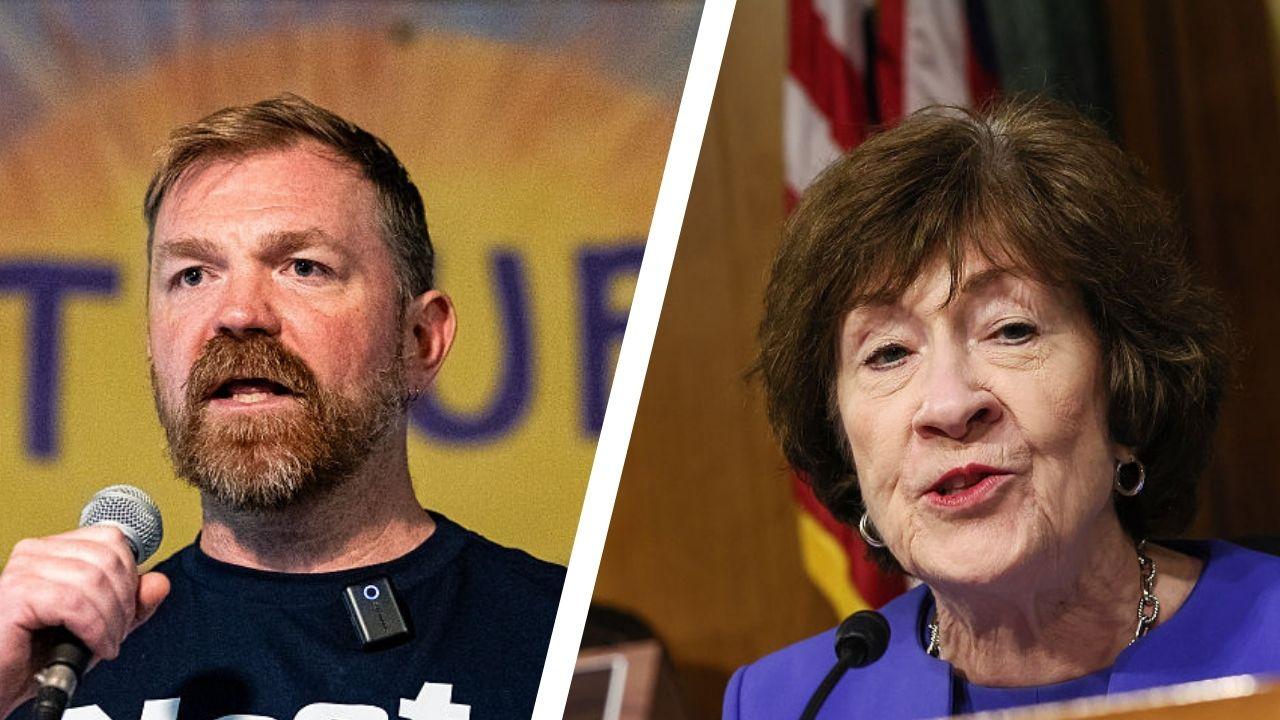
Collins, a 30-year incumbent, and Platner, a Marine combat veteran turned oysterman, held dueling events at opposite ends of the Pine Tree State this past weekend, where that contrast was on full display.
“I’ve brought home much-needed help to this state,” Collins told us in an interview here. “There are certainly those on the far-left and the far-right who are constantly criticizing me. But I believe that most people appreciate a pragmatic, common-sense, solutions-oriented approach.”
Collins is unapologetically leaning into her seniority and institutional know-how, which have enabled her to use that very system to benefit Maine. It’s a formula that’s been successful for the battle-tested Collins in her previous races, to the endless dread of Democratic leaders. Collins is betting that this same approach will insulate her from what’s becoming a deeply unfavorable political environment for Republicans.
But Platner is confronting that argument head-on without getting into the nitty-gritty of D.C.’s inside baseball. That’s a trap that Platner’s predecessors often fell into, even though he once suggested he could get a seat on the Senate Appropriations Committee as a freshman.
Platner acknowledged the importance of Senate seniority. But he said Collins’ earmarking success is a distraction from decades-long problems such as stagnant wages and high costs.
“Talking about it and being like, ‘No, you are right. [Seniority] is important. The power does matter. Structurally, you have to know what’s going on,” Platner said in an interview. “But also, since things didn’t get better, she clearly isn’t very good at this. Because if she was, we wouldn’t have this problem.”
Platner added, “She’s had 30 years. If the money you’re bringing into Maine is making it better, then why did it get worse?”
On the ground. Collins, the Senate Appropriations Committee chair, received a hero’s welcome here Friday in rural northern Maine. It was the grand opening of a hospital for which Collins secured more than $13 million in federal dollars.
Collins touted her stewardship of the Appropriations Committee as a “once-in-a-century opportunity” for Maine.
Meanwhile, at a town hall Sunday with military veterans 200 miles south in Portland, Platner railed against Collins as the embodiment of a corrupt political system. In fact, Platner uttered the word “system” more than three dozen times as he took questions from veterans of the wars in Vietnam, Iraq and Afghanistan at a VFW post.
Still, over the past five years, Collins has steered $1.5 billion in federal money to Maine, including more than $400 million this year alone. That’s a massive haul for a state that’s among the least populous in the country.
But Collins’ influence still may not be enough to overcome a potentially brutal midterm year for Republicans. High costs are top of mind for voters, even more so now with gas prices skyrocketing amid an unpopular war in Iran. President Donald Trump has openly dismissed these concerns. Collins said it’s “a huge burden.”
“The gas prices are way too high, and they’re a big problem for people in my state,” Collins said, noting that many Mainers have to drive long distances for work or school.
Headwinds. While Collins and Platner couldn’t be more different — on style, substance and so much more — they share one significant challenge: Both are trying to manage being out of step with their respective parties.
For Platner, it’s his antagonism of the Democratic establishment. Yet Platner will need to work closely with Democratic leadership to defeat Collins. This is the same leadership that’s been worried about Platner’s controversial past.
Platner was able to overcome initial revelations about his tattoo of a Nazi symbol, as well as racist and sexist comments he made online years ago, to easily beat Democratic Gov. Janet Mills, a top recruit of Senate Minority Leader Chuck Schumer.
For Collins, breaking with Trump is a necessity given his sagging approval ratings and his longstanding unpopularity in Maine. Senate GOP leaders talk openly about the importance of giving Collins space to distance herself from the party when necessary, while still viewing her as a team player. Vice President JD Vance acknowledged this last week as well.
To that end, Collins has leveraged her Senate clout to reverse some of the White House’s unilateral funding cuts and other federal moves that were particularly harmful to Maine, including attempts to withhold funding for a home heating assistance program. Earlier this year, Collins’ lobbying helped end an ICE surge in Maine.
Collins also opposed the One Big Beautiful Bill Act due to its Medicaid cuts, even though the legislation included a $50 billion rural hospital fund intended to blunt the impact. Senate Majority Whip John Barrasso said this only happened because Collins was at the table.
Platner argues Collins isn’t using her power nearly enough and too often resorts to “symbolic opposition” and “weak condemnations.”
“Since [Collins] has not displayed a real commitment to having a spine, she has not been able to use the power that I do think she has access to,” Platner added.
— Andrew Desiderio
NEW EVENT: Join us on Tuesday, June 9, at 8:30 a.m. ET for a conversation with Sen. Rick Scott (R-Fla.). Punchbowl News Founder Jake Sherman will sit down with Scott to discuss the news of the day, patent law abuse and competition around generic and biosimilar drug development. Afterward, David Marin, president of PCMA, will join Jake for a fireside chat. RSVP now!


THE AGENDA
Crunch time for GOP’s reconciliation bill
Senate GOP leaders plan to pass their $72 billion ICE and CBP funding package this week.
But first, they’ve got to settle a brutal procedural and political battle over $1 billion in the reconciliation bill for the Secret Service to help fund security for President Donald Trump’s White House ballroom project.
A sizable group of House and Senate Republicans doesn’t want to vote for any money related to Trump’s controversial ballroom while the cost of living is sky-high and gas is at $4.50-plus per gallon. But the White House really wants this, putting the GOP on a collision course.
Here’s how the fight is playing out:
1) The Senate parliamentarian ruled over the weekend that the $1 billion for the Secret Service doesn’t comply with reconciliation rules, per Budget Committee Democrats.
The Senate GOP leadership can and will keep going back to the parliamentarian with new language to try to make the provision work as part of the Byrd Bath process. It would be a relief for a number of vulnerable Republicans if this effort fails.
Senate Democrats have vowed to keep challenging any attempt to get the ballroom-related money into the package.
2) If the language passes muster with the parliamentarian, Senate GOP leaders have the vote-a-rama to worry about.
Senate Democrats will force amendments at a 50-vote threshold to strip the ballroom money and divert it to other projects. This could succeed. It would only require the support of a handful of Republicans.
No matter how the Byrd Bath shakes out, Senate Democrats plan to push ballroom-related amendments and force GOP senators to go on the record on the controversial project.
3) If the language somehow manages to survive the Senate, there’s still intense opposition in the House.
Week ahead. Meanwhile, key Senate committees will tee up the bill for a floor vote. The Homeland Security and Governmental Affairs Committee will mark up its portion of the bill at 8 a.m. Tuesday.
HSGAC Democrats are planning amendments related to ICE’s conduct, forcing transparency from administration officials and directing the Department of Homeland Security to address other national security needs, according to a Democratic committee aide.
The Senate Budget Committee meets at 9:30 a.m. Wednesday to report out the bill.
The Senate is likely to kick off the vote-a-rama on Thursday. Senate Minority Leader Chuck Schumer’s strategy is to focus the barrage of Democratic amendments on affordability and other politically sensitive issues, such as the Iran war and ballroom funding.
The House plans to vote on the reconciliation bill this week to meet Trump’s artificial June 1 deadline.
In the House. Speaker Mike Johnson is hosting his biggest supporters in Washington this week for his annual large-donor retreat.
The House isn’t in session until Wednesday, so we’ll revisit this in the days ahead. But Trump seemingly tried to blow up both a FISA reauthorization and the housing bill in one fell swoop, saying the SAVE America Act needs to be added into one or both.
FISA doesn’t expire for a couple of weeks, so lawmakers have some time there. Johnson plans to bring the GOP housing bill to the floor this week. But the speaker will need to maximize Republican support for the legislation, since it’s coming up under suspension of the rules, which requires a two-thirds majority. And Trump’s reengagement here could hurt GOP leaders.
— Laura Weiss and Jake Sherman
PRESENTED BY ROLLS-ROYCE

The Name You Know. The Work You Don’t.
TRUMP’S POWER
The MAGA South gets MAGAier
President Donald Trump is slumping in the polls, hitting his all-time worst approval rating as the Iran war drags on and gas prices soar.
Yet Trump’s stranglehold on the already red South is growing ever tighter. Just look at what’s unfolded during the last month.
— Incumbent GOP Sen. Bill Cassidy (La.) failed to even make the runoff in the Bayou State’s Senate GOP primary, finishing a distant third behind his Republican challengers. Cassidy’s sin: voting to convict Trump in the 2021 Senate impeachment trial following the Jan. 6 Capitol riot.
Cassidy spent millions of dollars trying to convince Louisiana Republican voters that he was on Trump’s side. But Trump, seeking revenge on Cassidy, backed GOP Rep. Julia Letlow, who finished first in Saturday’s primary (although she missed getting more than 50% and winning outright). Letlow now will face former GOP Rep. John Fleming in the June 27 runoff.
— Trump and top Republican officials have pressured GOP governors to redistrict following the Supreme Court’s April 29th Callais decision, which gutted Section Two of the Voting Rights Act. This could result in Republicans picking up as many as four Democratic-held seats in Alabama, Louisiana, Tennessee and South Carolina.
Tennessee Republican Gov. Bill Lee called a special session of the Volunteer State legislature after speaking with Trump. The result — Democratic Rep. Steve Cohen’s district was redrawn to be more red, and the veteran lawmaker announced his retirement. Tennessee’s House delegation in the next Congress will include seven Republicans and no Democrats.
— Florida gets redder. GOP Gov. Ron DeSantis, who wants to succeed Trump in the Oval Office, redrew the Sunshine State’s congressional map to give Republicans a chance to pick up as many as four House seats. Democrats think they can win one or more of these seats in what should be a good year for them, but it’ll cost a lot of money.
— Trump wants very badly to defeat GOP Rep. Thomas Massie (Ky.), who voted against the One Big Beautiful Bill and a host of other presidential initiatives. Trump has endorsed Ed Gallrein, a former Navy SEAL officer who says he’ll vote with the president all the time.
It’s gotten exceptionally ugly in Kentucky’s May 19 primary. Trump allies are accusing Massie of being “a Nazi” tied to white supremacists and Holocaust deniers. Pro-Israel groups are spending very heavily here against Massie, who has responded by offering legislation requiring anyone lobbying on behalf of AIPAC to register as foreign agents with the Justice Department.
“VOTE FOR ED GALLREIN, AND WIPE AWAY THE STENCH OF ONE OF THE WORST CONGRESSMEN IN THE HISTORY OF OUR GREAT PARTY, THOMAS MASSIE,” Trump declared on Saturday.
Even supporting Massie can be politically dangerous for Republicans. Trump has threatened to back a primary challenge to Rep. Lauren Boebert (R-Colo.) because she campaigned on Massie’s behalf.
– John Bresnahan
PRESENTED BY ROLLS-ROYCE

The Name You Know. The Work You Don’t.
THE HOUSE MAP
Powell’s takeaways from a high-stakes primary win
For years, Democrats have fixated on flipping Nebraska’s 2nd District blue. Despite the Omaha-area seat voting for Democrats at the presidential level, Rep. Don Bacon (R-Neb.) has consistently beat back Democratic challengers with a moderate brand.
But now Bacon is retiring, and Democrats see a new opportunity given the seat’s open status.
We caught up with Denise Powell, who won the fiercely contested Democratic primary last Tuesday, to hear her takeaways about the primary win and what’s next in the fall.
The primary. Powell, a small business owner and first-time candidate, beat out more left-wing state Sen. John Cavanaugh by fewer than 2,000 votes. Powell said her focus on affordability and “pissed-off mom ads” connected with people.
“It was clear that folks were looking for something a little different,” Powell said.
The general election. Powell will face Omaha City Councilmember Brinker Harding in the toss-up general election.
Powell noted President Donald Trump has endorsed Harding, and she accused Harding of “being in lockstep with [Trump’s] agenda every step of the way.”
“[Harding] praised the war in Iran, and gas prices here are $4 a gallon. He’s not pushing back on any of Trump’s tariff policies. He supported the Big Beautiful Bill,” Powell said. “I think that’s pretty tone deaf in this moment.”
Jeffries for leader? Powell said, “It would be an honor to serve under the first Black speaker of the House.”
Powell, who benefited from $600,000 of spending from the Congressional Hispanic Caucus BOLD PAC, noted she “would be the first Latina and the first person of color to ever serve in the federal delegation” in Nebraska.
— Max Cohen
📆
What we’re watching
Senate. The chamber will return Monday night and is expected to hold a 5:30 p.m. vote on a nominations package.
The Senate Homeland Security panel will mark up its portion of the reconciliation bill funding ICE and CBP on Tuesday at 8 a.m. The Senate Budget Committee will meet at 9:30 a.m. Wednesday to report out the package. The vote-a-rama that comes before final passage is likely to begin Thursday.
Off the floor, the Senate Commerce Committee will meet at 2 p.m. Tuesday for a hearing on last year’s DCA plane collision. Senate Judiciary will have a subcommittee hearing at 2:30 p.m. Tuesday on the Supreme Court’s Callais decision.
The Senate Appropriations Committee will continue to hold budget hearings in various subcommittees, including Tuesday’s hearings with acting Attorney General Todd Blanche, acting Labor Secretary Keith Sonderling and Transportation Secretary Sean Duffy. NIH Director Jay Bhattacharya will be up on Thursday.
House. The House is out on Monday and Tuesday. First votes are on Wednesday. The chamber will look to pass the reconciliation bill before leaving for Memorial Day recess.
The House Transportation and Infrastructure Committee will markup its $580 billion highway and infrastructure bill on Thursday. The package includes the five-year reauthorization of major highway, transit and infrastructure programs.
Washington. President Donald Trump will participate in a 4:30 p.m. healthcare affordability event today at the White House.
The campaign. There are a ton of primaries on Tuesday. The most high-profile is Georgia’s Republican Senate election, where three candidates — Mike Collins, Derek Dooley and Buddy Carter — are vying to advance to a two-person runoff. This is for a chance to take on Sen. Jon Ossoff (D-Ga.).
— Laura Weiss, Max Cohen and Jake Sherman
AND THERE’S MORE
Tax. Sens. Elizabeth Warren (D-Mass.), Ron Wyden (D-Ore.) and Angus King (I-Maine) requested that the Government Accountability Office conduct a review of options for free tax filing since the Trump Administration axed the Direct File program.
The senators, in a letter sent Sunday night, asked GAO to address concerns about the costs, user experience and accessibility of the existing Free File system, due to what they called “a history of misconduct” by the program’s private-sector partners. According to previous studies referenced in the senators’ letter, Free File partners have misled eligible taxpayers into paying for tax help and have improperly shared taxpayer data on occasion.
— Catherine Leffert

Presented by AstraZeneca

The 340B program is supposed to help vulnerable patients—but without strong safeguards, it’s siphoning away funds that could be used for free and charitable medicine. The 340B Rebate Model Pilot improves program integrity, preventing duplicate discounts and strengthening accountability. Urge HHS to implement the pilot today. Learn why it matters.

Crucial Capitol Hill news AM, Midday, and PM—5 times a week
Join a community of some of the most powerful people in Washington and beyond. Exclusive newsmaker events, parties, in-person and virtual briefings and more.
Subscribe to Premium
Special Projects
Explore our deep dives into the issues that matter the most today and will shape tomorrow's future, with expert reporting that goes beyond the headlines and into the heart of the Capitol.
Check it outEvery single issue of Punchbowl News published, all in one place
Visit the archive
Presented by AstraZeneca
The 340B program lacks transparency—making it hard to tell if it’s actually helping vulnerable patients. HHS can fix the problem by implementing the 340B Rebate Model Pilot, ensuring the program is transparent, compliant, and accountable. Learn more.