
THE TOP
The next economic battles are already here
Welcome back to the Quarterly Vault.
Congressional financial policy in 2026 has been defined by bipartisan fights that began — and should have probably ended — in 2025. Landmark crypto and housing legislative efforts alike have dragged out on Capitol Hill, and both face serious challenges before reaching President Donald Trump’s desk.
In this edition, we wanted to look past those conflicts and ahead to the fights just around the corner. You don’t have to look too far.
Start with prediction markets, which have become a defining feature of the consumer financial landscape under the Trump administration.
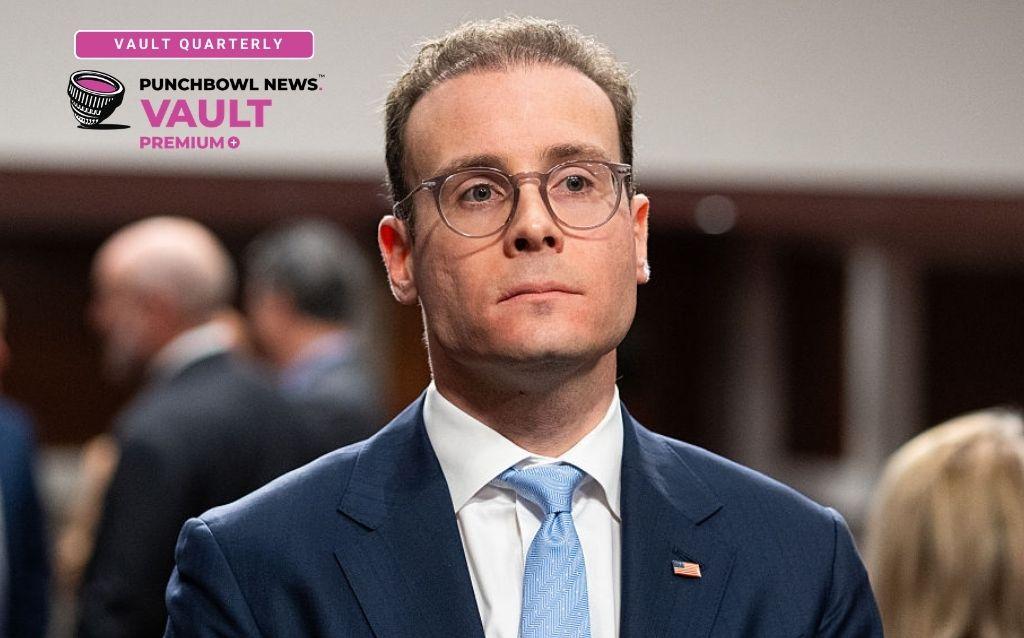
That’s why we sat down with Commodity Futures Trading Commission Chair Mike Selig. Under the Trump administration, the CFTC is asserting broad authority to regulate the not-quite-gambling industry.
Selig told us he’s moving “very quickly” to give prediction markets a real foothold in the American economy. Selig’s vision includes a world where Americans “hedge” their everyday risks by betting on everything from the weather to sports and the outcomes of federal elections. We went deep on Selig’s thoughts and hopes for the nascent sector.
Then, there’s trade. Even after the Supreme Court’s ruling against much of Trump’s tariff regime, the president’s trade wars are raging and he’s brushing off the idea that Congress should play any part. But Democrats are eager to wage a political battle over the tariffs.
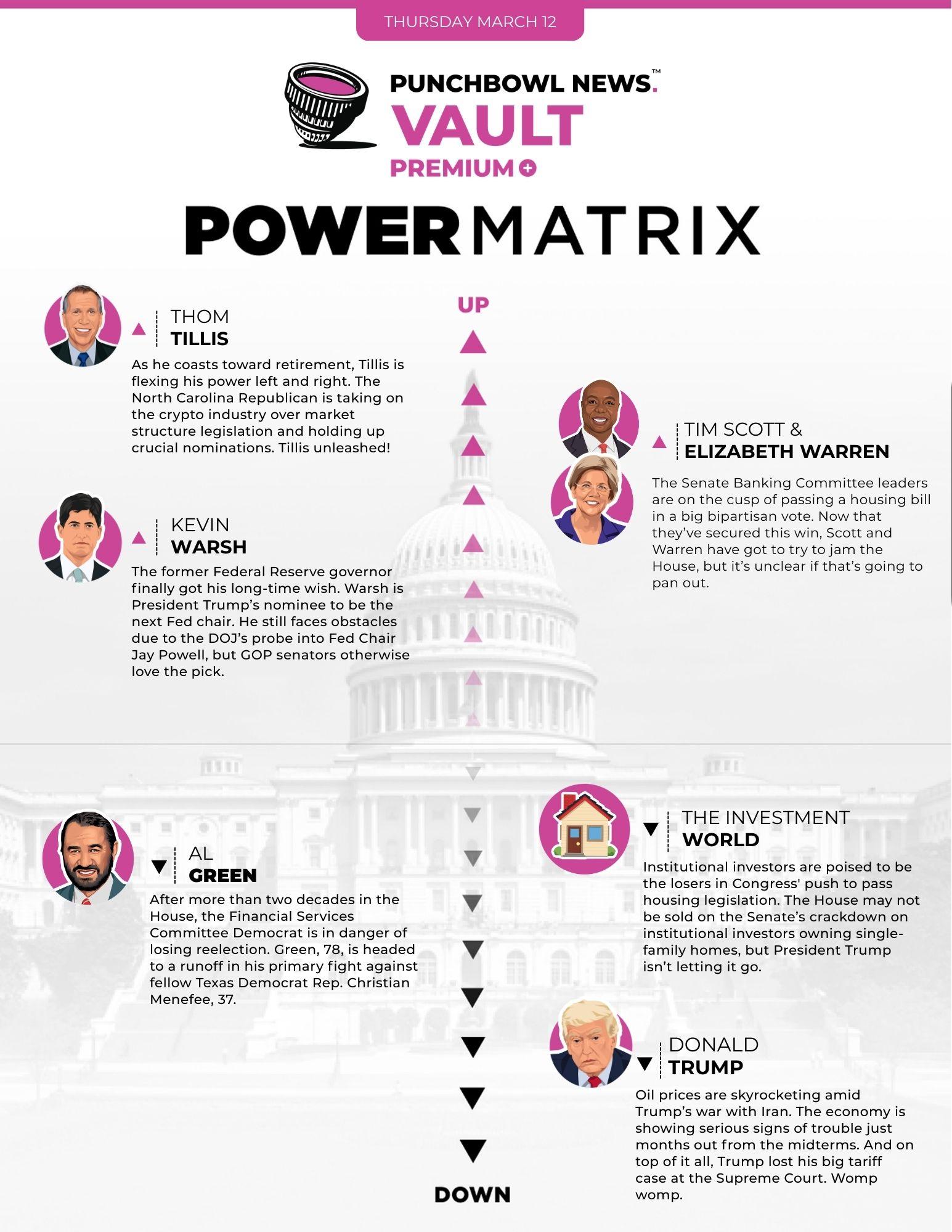
And of course, no Quarterly Vault would be complete without the Vault Matrix. We’ve got some familiar and new faces alike jockeying for power in the nation’s capital.
Thank you, as always, for reading. This is just a small preview of the Vault coverage we deliver each week. Not a Vault subscriber? Learn more here.
— Brendan Pedersen and Laura Weiss
THE INTERVIEW
Prediction markets have a champion in the CFTC
Prediction markets have taken the United States by storm. Commodity Futures Trading Commission Chair Mike Selig wants to do something about that — not a crackdown, to be clear, but a fulsome regulatory hug.
“We need to embrace and actually do our jobs as regulators to regulate these things,” Selig said in an interview inside the CFTC’s downtown office. “I’m taking that job on. I’m moving very quickly.”
If your advertisements are anything like ours, you have been seeing a lot of marketing for prediction markets over the past year. Leading firms like Kalshi and Polymarket rely on a CFTC-regulated financial product — event contracts — to allow customers to place bets on everything from the outcome of college sports to who will win the 50th season of Survivor.
Selig believes event contracts represent a new frontier in how every day consumers can manage their everyday financial risks. And his top priority is defending the CFTC’s sole authority over these markets.
“I think we should get past this silly debate as to what the authority of the agency is. It’s very clear in the statute,” Selig said. “Then, we can move on to this really, more interesting question of, what should policy look like for event contracts?”
The CFTC’s role in this market is simple common sense to Selig, a former SEC and CFTC staffer.
“Congress has had this appetite for the CFTC to be the pretty-much-everything regulator, to the extent you’re treating it in the future, creating a future market,” Selig said. “Why not predictions on politics?”
Here’s some related news. We obtained the CFTC’s first Trump-era release of guidance for prediction market firms.
A six-page document, set to be published later today, summarizes the CFTC’s “current views on the listing and trading of event contracts.” That includes the need for prediction market companies to “comply with the 23 statutory core principles” set for in the Commodity Exchange Act, such as “trading only derivative contracts that are not readily susceptible to manipulation.”
And the CFTC document reminds readers that the commission “retains authority” to stay any event contract that fails to prove its “not readily susceptible to manipulation.”
Selig told us that monitoring for — and catching — market manipulation is just part of the process.
“It’s not always the case that every certification is bulletproof. There’s risk that things can be manipulated. That happens in our markets for every commodity,” Selig said. “We wouldn’t have exchanges if we’re throwing them all out of business because there happens to be manipulation.”
Gambling? Not in this commodity regulator, Selig says.
A lot of ink has been spilled on whether events contracts are simply gambling by another name. State and tribal governments certainly think so.
Selig disagrees, but it’s difficult to avoid the association entirely. The CFTC chair tried to distinguish between the rigor of the federal financial regulators and that of a casino.
“Our markets aren’t designed for gambling. They’re designed for risk management,” Selig said. “Hedgers, speculators, market makers, we’ve got all sorts of market participants. But these are financial markets, and we have really different standards than, of course, the casinos and all that.”
Use case. Back in February, Selig argued that prediction markets provide “useful functions for society by allowing everyday Americans to hedge commercial risks.”
We asked: Do everyday Americans need to hedge their commercial risks? Really? Selig’s “yes” was emphatic.
“This is a real opportunity for everyday Americans to be able to manage certain risk,” Selig said. “I do view this as something that democratizes access to our derivatives market.”
Here’s the example Selig posed to us:
“Say somebody has a condition. They want to be able to manage the potential risk of having a future treatment or medical costs. They can enter into a prediction market and place a bet on the likelihood of something passing a drug trial.”
Next up. Selig’s agency will play a key role in setting regulatory standards for crypto, whether or not Congress can muscle through a bill overhauling the sector’s legal framework.
Selig — whose office shelves feature a pair of black high top shoes with a bitcoin logo, resembling merchandise sold by President Donald Trump on the 2024 campaign trail — says he was an early believer in crypto after reading the original bitcoin white paper in 2011.
“We rely so much on intermediaries and gatekeepers in every aspect of our lives,” Selig said. “That really should not necessarily be the case in a free society where we’re trying to preserve privacy in many aspects of our lives. And the technology’s there to make that a reality.”
– Brendan Pedersen
TRADE
The political fight over tariffs
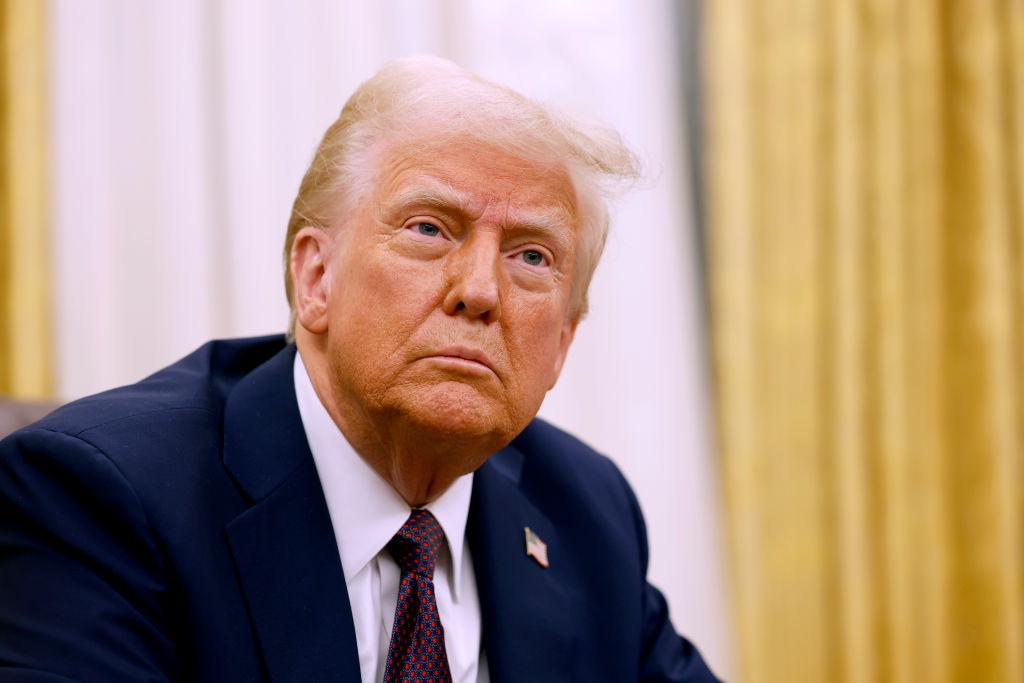
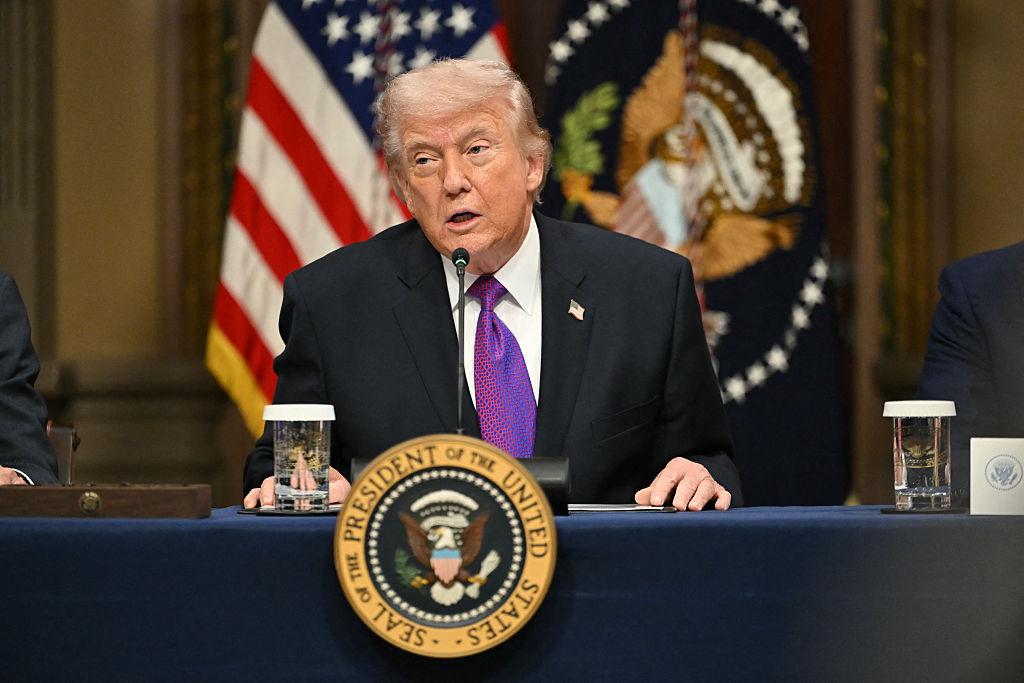
President Donald Trump’s massive tariff campaign has become a hallmark of his second term in office.
Even after the Supreme Court struck down the tariffs that Trump was levying under the International Emergency Economic Powers Act, the administration is drawing on a series of other authorities to keep its trade wars raging.
As the Trump administration charts its path forward with the tariffs, Democrats are finding new ways to fight back. When Trump was using IEEPA for tariffs, Democrats could trigger congressional votes to end the emergency authority allowing for the levies.
In the wake of SCOTUS’ decision, Democrats are turning to new bills and pressure campaigns to oppose the tariffs and demand refunds for businesses — though without the same tools to force consideration in Congress.
But even as the tariff regime and Democrats’ policy response have shifted in Washington, the political battle keeps intensifying as the midterms get closer.
That’s playing out on TV in congressional campaigns. Here’s what’s been airing over the last month and what it tells us about the trade debate.
House races. Democrat-aligned groups have been up with spots focused on tariffs blaming them for rising costs in some of the most hotly-contested House races.
That includes ads targeting GOP Reps. Juan Ciscomani in Arizona, Zach Nunn in Iowa, Scott Perry in Pennsylvania and Derrick Van Orden in Wisconsin.
Democrats are also touting their opposition to tariffs in ads. Former Rep. David Trone (D-Md.), who’s mounting a primary challenge against Rep. April McClain Delaney (D-Md.), went up with an ad recently that invokes the Revolutionary War. In it, Trone mentions Trump “applying crazy tariffs,” among things he’s pledging to fight.
Cheering tariffs. There are groups making the case for Trump’s trade wars on TV.
The Steel Manufacturers Association thanks Trump in an ad that’s aired in recent weeks, applauding steel tariffs. The group represents companies including Nucor and Steel Dynamics.
A spot from By American For America says Trump is “hitting Asia with strategic tariffs that put America first” and aiding U.S. manufacturers.
USMCA angle. Trump has picked trade fights with Canada and Mexico since returning to office, complicating a major trade deadline this year. USMCA, the landmark North American trade deal from Trump’s first term, is up for review by July.
A group of major farming groups and food companies, the Agricultural Coalition for USMCA, went up with an ad in Washington, D.C. this week. Here’s what it argues:
“The agreement lowers grocery prices for American families, gives farmers certainty, strengthens supply chains and maintains our global competitiveness. Strengthening and upholding USMCA puts America first.”
— Laura Weiss
VAULT WRAPPED
ICYMI: The latest on housing, crypto and trade
Vault has been keeping busy during the first part of 2026.
Here’s the best of our recent reporting on the biggest financial services, tax and trade storylines dominating Capitol Hill.
Housing. The Senate is poised to overwhelmingly pass a bipartisan housing bill Thursday. The legislation aims to make it easier to build new homes in the hopes of making homeownership more affordable. But disagreements remain with the House, a persistent problem that we have been reporting on for months.
We broke the news about House Financial Services Committee Chair French Hill’s (R-Ark.) declaration that he’s not going to simply rubber-stamp what the Senate passes. That led Senate Banking Committee Chair Tim Scott (R-S.C.) to call us up to say he doesn’t understand the House’s problem, and that they need to act soon. We’ve also told you about the Trump administration’s effort to get big institutional investors out of the housing market and how the industry is fighting back.
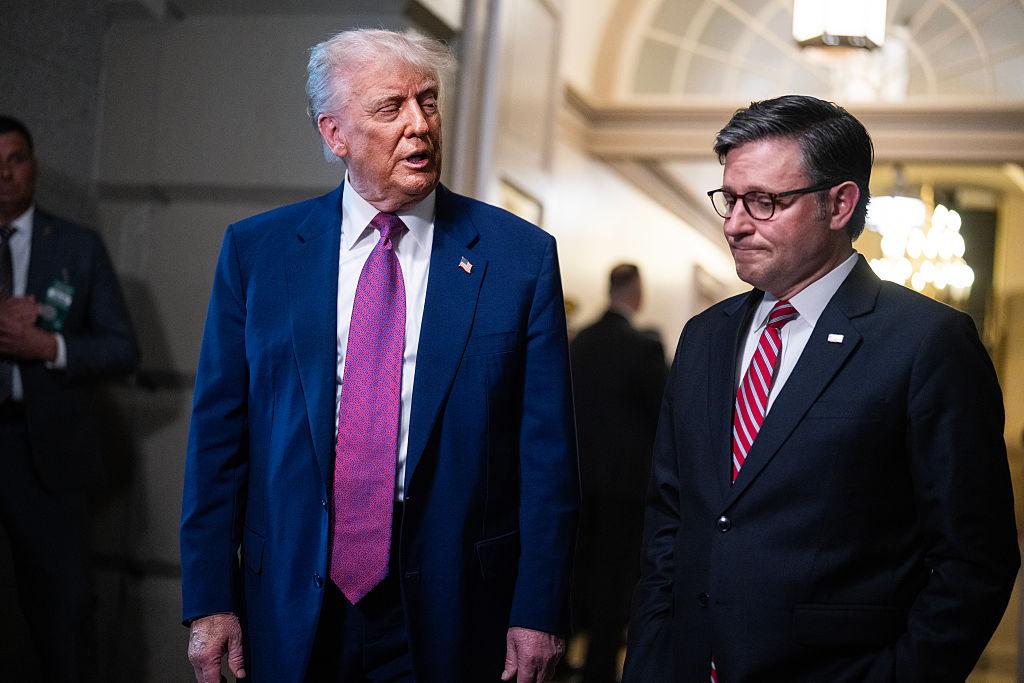
We also broke the news Wednesday that the housing bill isn’t a big priority for President Donald Trump while he focuses his energies on the SAVE America Act. Or, in his words as relayed to lawmakers via Speaker Mike Johnson: “no one gives a [bleep] about housing.”
Crypto. The effort to move legislation laying out the rules of the road for crypto markets is stalling in the Senate. We should know, we’ve spent a lot of time reporting on every facet of this debate. We chronicled how and why the Senate Banking Committee’s planned markup of market structure legislation fell apart. Talks since then have gone nowhere. That doesn’t mean crypto advocates like Marc Andreessen are giving up.
Meanwhile, tax writers are trying to pull off their own crypto feat. We’ve reported that Senate Finance Committee leaders are bullish on the prospect of a bipartisan bill setting tax rules for digital assets. House Ways and Means Committee Republicans have been working on the issue as well.
Trade. The Supreme Court’s decision to deem Trump’s tariffs illegal shook Washington. We dove in right away to report out what this means for Congress. We’ve also been following Democratic efforts to pressure the administration to refund the tariffs the government has already collected.
In the lead-up to the SCOTUS decision, we had the latest on the political mess that was brewing for Republicans on Capitol Hill.
Fed. The Federal Reserve will soon have a new chair. How soon is the question. We’ve been reporting on how Senate Republicans feel about Kevin Warsh, President Trump’s nominee to lead the Fed. Short answer: They love him. But Sen. Thom Tillis (R-N.C.) isn’t relenting on his promise to block any Fed nominee until the Justice Department drops its criminal investigation into current Chair Jay Powell. Nonetheless, Warsh is beginning to make the rounds in the Senate as we’ve covered here and here.
— Dave Clarke
Vault Recap
Editorial photos provided by Getty Images. Political ads courtesy of AdImpact.
The 340B program is supposed to help vulnerable patients—but without strong safeguards, it’s siphoning away funds that could be used for free and charitable medicine. The 340B Rebate Model Pilot improves program integrity, preventing duplicate discounts and strengthening accountability. Urge HHS to implement the pilot today. Learn why it matters.
Crucial Capitol Hill news AM, Midday, and PM—5 times a week
Join a community of some of the most powerful people in Washington and beyond. Exclusive newsmaker events, parties, in-person and virtual briefings and more.
Subscribe to Premium
Special Projects
Explore our deep dives into the issues that matter the most today and will shape tomorrow's future, with expert reporting that goes beyond the headlines and into the heart of the Capitol.
Check it outEvery single issue of Punchbowl News published, all in one place
Visit the archive

The 340B program lacks transparency—making it hard to tell if it’s actually helping vulnerable patients. HHS can fix the problem by implementing the 340B Rebate Model Pilot, ensuring the program is transparent, compliant, and accountable. Learn more.