


May 13, 2026



PRESENTED BY

THE TOP
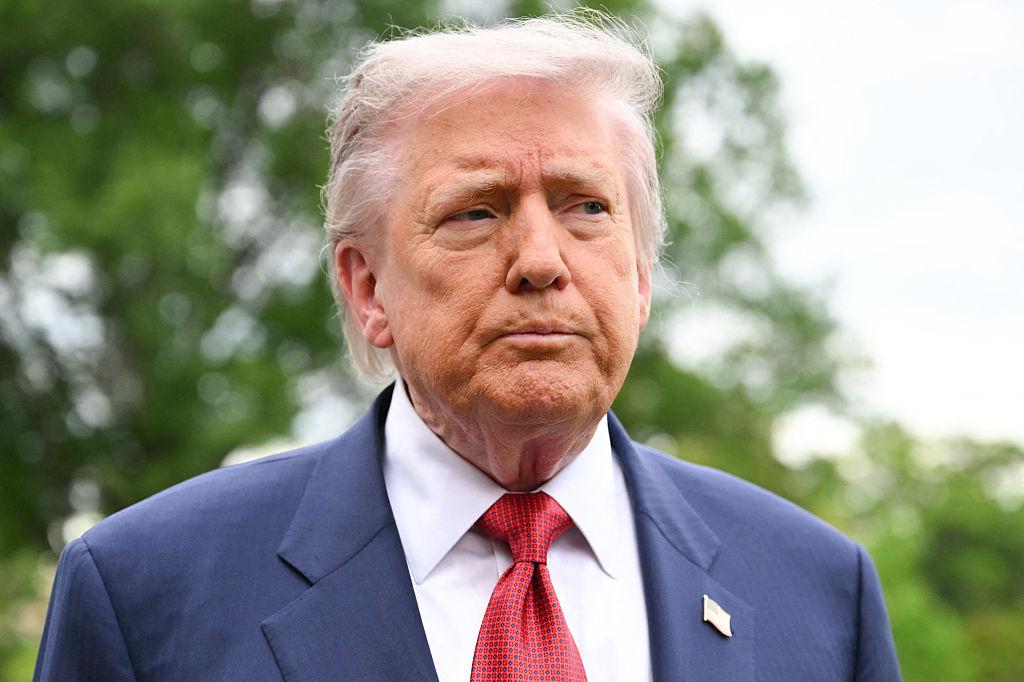
Is Trump losing sway on the Hill?
Happy Wednesday morning.
Here’s a question that’s bouncing around Republican circles in Washington: Is President Donald Trump losing sway on Capitol Hill?
On issue after issue, both in Washington and in state capitals around the country, Republicans are giving Trump the stiff arm. They’re ignoring his policy demands and overlooking his diatribes, even as they continue pledging allegiance to Trump politically.
Just consider what’s happened this week.
Senate Majority Leader John Thune is all but dismissing Trump’s call to pause the federal gas tax to help Americans cope with sky-high gas prices stemming from the war in Iran. Speaker Mike Johnson called it an “intriguing idea” but noted it came with challenges.
House and Senate Republicans are cool to the Secret Service’s demand to spend $1 billion on fortifying the White House, in part to protect Trump’s controversial new ballroom, a project Congress has never approved.
Secret Service Director Sean Curran met with Senate Republicans on Tuesday to press them on approving the security funding in the upcoming immigration reconciliation bill. We asked one GOP senator whether it was convincing, and they said, “Nope.”
On Monday evening, Trump called on Congress to pass the Senate’s housing bill. But Johnson said the House would continue to work on changes to the measure, an explicit rebuke of Trump’s approach even as senators are clamoring for an easy legislative win on affordability.
House Financial Services Committee Chair French Hill (R-Ark.) said “no” when we asked if Trump’s post will prompt him to move quicker.
Rep. Bill Huizenga (R-Mich.), the panel’s vice chair, was even more direct.
“I am not focused on the president’s Truth Socials on this,” Huizenga said.
Republicans in the South Carolina state senate rejected a motion Tuesday to extend their session to redraw congressional lines in The Palmetto State. Republicans could turn a 6R-1D map into a 7R map, eliminating longtime Democratic Rep. Jim Clyburn. More on that in a moment.
Here are some caveats: Republicans oftentimes fold to Trump — at Punchbowl News, we called it “KTF,” or “Known to Fold.” He remains the most powerful figure in his party. Trump is conducting a war in the Middle East with practically no oversight or pushback from Congress. He’s taken unilateral actions that other presidents would balk at, including deploying the National Guard inside U.S. cities and mass firings at federal agencies.
Plus, we’ve seen what happens to some Republicans who ignore him. A bunch of Indiana Republican state senators are out of a job after resisting Trump’s push to redraw the state’s map.
But this opposition has been on a slow boil for months now.
— Republicans rebuffed Trump’s demand to put language blocking state AI regulations in the NDAA last year.
— The Senate GOP has resisted multiple Trump demands to blow up the filibuster and end the “blue-slip” tradition that’s stymying many of his U.S. attorney nominees.
— In January, Trump called on Congress to pass legislation to end sanctuary cities. Crickets on that front.
— Congressional Republicans still haven’t sent the White House the SAVE America Act, which Trump has been hammering for months.
Ironically, it’s been the Senate — not the House — that’s more aligned with the White House’s priorities. Despite Trump’s constant prodding of Thune over the filibuster and the SAVE America Act, it was the Senate that pursued Trump’s preferences on FISA and DHS funding — not the House. The same is now true with the housing bill.
Trump’s general view is that Congress is a nuisance, according to people familiar with his thinking. Trump would rather pursue his own priorities than deal with wobbly GOP lawmakers.
The one area where this White House has been successful is pushing Senate Republicans to confirm Trump’s nominees. Thune’s chamber has done so at an impressive pace. Kevin Warsh will be confirmed as chair of the Federal Reserve by the end of the week — though it would’ve happened sooner if not for Sen. Thom Tillis (R-N.C.).
The indifference goes both ways. Trump has ignored some Hill Republican demands, too. He refused to negotiate a deal with Democrats to extend the Obamacare enhanced premium subsidies, angering vulnerable Republicans who are dealing with the political fallout.
Yet the “do-whatever-Trump-wants” incentive structure for many House and Senate Republicans has flipped. Trump’s approval rating is in the 30s. Most Republicans are through their party primaries, meaning there’s no longer a risk of a Trump-backed primary challenger. As the political environment worsens for the GOP, many rank-and-file Republicans are finding it necessary to split with the president.
Case in point: Sen. Jon Husted (R-Ohio), who’s facing a formidable challenger in former Sen. Sherrod Brown (D-Ohio), said Tuesday he wanted more information about the White House’s ballroom security funding request before committing to backing it.
Sen. Dan Sullivan (R-Alaska) — who’s facing off against former Rep. Mary Peltola (D-Alaska), a top recruit of Senate Minority Leader Chuck Schumer — has also been voting like he’s vulnerable. Sullivan voted to advance Democrats’ Obamacare subsidies proposals on the floor last year. During a recent vote-a-rama, Sullivan voted for several Democratic amendments focused on cost-of-living issues.
As a reminder, Trump won Ohio and Alaska in 2024 by 11 points and 13 points, respectively.
— Jake Sherman, Andrew Desiderio and Brendan Pedersen


REDISTRICTING WARS
Clyburn: GOP redistricting is ‘Jim Crow 2.0’
Rep. Jim Clyburn (D-S.C.) said Republicans are trying to institute “Jim Crow 2.0.” Rep. Troy Carter (D-La.) complained there’s “a mad dash across the South to get rid of African-American representation.” And Rep. Emanuel Cleaver (D-Mo.) said the country is “moving back to where we were before all the struggles, all the marches that we’ve done” as part of the 1960s civil rights movement.
Clyburn, Carter and Cleaver are three of the Black Democrats being targeted for redistricting by Republicans in their respective home states. Carter and Clyburn became endangered following the Supreme Court’s bombshell Callais decision, which gutted Section 2 of the 1965 Voting Rights Act. Republicans are well-positioned to gain between three and six seats in redraws, most of which are held by Black Democrats.
The shock and anger among these Democrats — many of them longtime members — is growing exponentially as the situation unfolds. They blame the Supreme Court, the Trump administration and Republicans broadly for trying to “turn back the clock” on Black lawmakers. They also see it as an effort by Republicans to gerrymander a permanent House majority.
“It ain’t about Jim Clyburn’s district. Why do you all keep saying my district?” Clyburn told reporters on Tuesday, just hours after South Carolina Republicans had punted on redrawing the state’s congressional map.
“It’s a comprehensive approach to creating Jim Crow 2.0,” Clyburn added. “This is why I’m here… I’m gonna run no matter what.”
Republicans in the South Carolina Senate declined to extend their current session to include redistricting. So far, GOP Gov. Henry McMaster hasn’t indicated whether he will call a special session.
Here’s the latest in this rapidly changing redistricting landscape.
Louisiana. The Louisiana Senate met Tuesday evening to narrow down possible new maps. The most likely map is a 5R-1D, which would eliminate a current Democratic seat. The new map has one Democratic seat that stretches from Baton Rouge to New Orleans.
In an interview, Carter said he doesn’t envision a scenario where he and fellow Louisiana Democratic Rep. Cleo Fields run against each other. Both are focused on fighting to keep two Black opportunity seats, Carter said.
Missouri. Cleaver received a series of disappointing rulings from the Missouri Supreme Court on Tuesday that may well have ended Democrats’ hopes of pausing the GOP-drawn map in the Show-Me State for the cycle.
Missouri Democrats gathered hundreds of thousands of signatures to trigger a referendum on the Republican redistricting plan, which put Cleaver in a deep red seat. Democrats had hoped those signatures would pause the map for the 2026 cycle until the voters could approve it.
The Missouri Supreme Court ruled Tuesday that the submission of a referendum petition didn’t automatically stop the map from going into effect. The justices also rejected a suit claiming the map violated constitutional requirements for compactness.
Missouri could have a referendum before 2028, but it looks like Cleaver won’t have a winnable seat to run in this November.
– John Bresnahan, Ally Mutnick and Jake Sherman
PRESENTED BY THE ALZHEIMER’S ASSOCIATION

More than 9 in 10 Americans say they would want a simple test for Alzheimer’s. Learn more.
VAULT
Vault: House grinds on housing, Senate be damned
President Donald Trump’s call for the passage of the 21st Century ROAD to Housing Act hasn’t knocked the House’s attempt to amend the Senate’s bill off track.
As we noted above, House Republicans are, if anything, digging in.
We sympathize with the White House officials who continue to say that Trump wants the House to simply pass the Senate’s housing bill.
But the fact is, a broad spectrum of House Republicans aren’t playing along, from Speaker Mike Johnson down to Rep. Chip Roy (R-Texas), who told us Tuesday night that the Senate’s bill “needs work.”
Let’s be clear. The White House owns this state of affairs.
It took nearly two months for Trump to use his bully pulpit to demand that the House pass the Senate housing bill. Senate Banking Committee leaders Tim Scott (R-S.C.) and Elizabeth Warren (D-Mass.) have spent weeks waiting for Trump to help jam the House with their package.
We’d also note key differences between Trump’s call for a housing bill and this 2025 post calling for the passage of crypto legislation that ended some House versus Senate intrigue over stablecoins.
Trump’s housing post simply asked for “Congress to pass” the 21st Century ROAD to Housing Act. The president’s call for the passage of the GENIUS Act was far more specific, saying: “Get it to my desk, ASAP — NO DELAYS, NO ADD ONS.”
Inside talks. The policy focus remains the same as it has been since April. House Financial Services Committee Chair French Hill (R-Ark.) and Rep. Maxine Waters (D-Calif.) continue to negotiate primarily on changes to the bill’s treatment of institutional investor prohibitions.
We caught up with Hill on Tuesday afternoon to discuss the state of those talks. The Arkansas Republican remains reserved, saying that he “would hope we can find good bicameral language… that can accomplish the goals of the president.”
We also asked Hill whether he expected any language targeting “build to rent” developments would remain in the House’s version. The Senate’s language there is starkly unpopular.
Hill said it would be “premature” to say, but he’s clearly not a fan. “A lot of members have serious concerns about the seven-year sale mandate,” the chair said.
– Brendan Pedersen
PRESENTED BY THE ALZHEIMER’S ASSOCIATION

Alzheimer’s “mammogram moment”: Congress must pass the ASAP Act.
THE CAMPAIGN
Neb. House Dem primary too close to call
Denise Powell leads state Sen. John Cavanaugh by just over 1,000 votes in an incredibly tight race for the Democratic nomination in Nebraska’s 2nd District.
Powell had 38.9% of the vote to Cavanaugh’s 36.8% as of early Wednesday morning, with 89% of the vote in.
This seat is a top pickup opportunity for Democrats. GOP Rep. Don Bacon is retiring, and former Vice President Kamala Harris won the district in 2024. But the Democratic primary grew increasingly contentious in the closing days and drew millions of dollars in outside spending.
The eventual Democratic nominee will face GOP candidate Brinker Harding in November.
Nebraska’s Senate Democratic primary. Independent Dan Osborn received a major boost when Cindy Burbank won the Democratic primary. Burbank has pledged to drop out of the race to consolidate support for Osborn, who’s challenging incumbent Sen. Pete Ricketts (R-Neb.). Democrats are coalescing around Osborn, whom they view as their best chance to unseat Ricketts.
West Virginia Senate GOP primary. Sen. Shelley Moore Capito (R-W.Va.) beat back a number of primary challengers to win her primary. With nearly all the votes in, Capito had a sizable 66.5% of the vote. Her closest competitor, state Sen. Adam Willis, had 19%.
– Max Cohen and Ally Mutnick
📆
What we’re watching
House. House Republicans will hold their weekly meeting today at the Capitol Hill Club to discuss political topics.
House Democrats will hold their weekly caucus meeting in the Capitol.
The House Foreign Affairs Committee holds a markup at 10 a.m. on various measures, including several on foreign military sales.
Pentagon policy chief Elbridge Colby is expected to attend the Republican Study Committee lunch, two sources confirmed.
Senate. Senators are expected to vote around 11:30 a.m. on an Iran war powers resolution from Sen. Jeff Merkley (D-Ore.). Senators will then take an initial procedural vote on Sen. John Kennedy’s (R-La.) resolution barring senators from getting paid during government shutdowns.
The Senate is slated to vote in the afternoon to confirm Kevin Warsh as chair of the Federal Reserve. There are also votes expected on three CRAs from Democrats.
Meanwhile, Coinbase CEO Brian Armstrong is expected to speak at the Senate GOP Steering Committee lunch ahead of a major crypto markup Thursday.
Several Trump administration officials will be in the Senate for budget hearings. Senate appropriators will grill EPA Administrator Lee Zeldin at 10:30 a.m. and GSA Administrator Edward Forst at 2 p.m.
The Senate Judiciary Committee will hold a hearing on “Landmark Social Media Verdicts” at 2:30 p.m.
Trump. President Donald Trump arrives in China today ahead of a 10:15 p.m. ET bilateral meeting with Chinese President Xi Jinping.
– Laura Weiss, Anthony Adragna and Briana Reilly
AND THERE’S MORE
We’ve got news on several fronts for you.
Rail bill fight. Grover Norquist’s Americans for Tax Reform is launching a new $1 million ad campaign against the Railway Safety Act.
The seven-figure buy includes TV, streaming, social media and podcast ads, arguing that the bill would raise prices. The TV spot also seeks to tie the effort to labor unions, saying it’s “about payoffs to union bosses.”
The push comes as top transportation lawmakers are considering tucking the legislation into a surface transportation reauthorization bill. The Railway Safety Act was first introduced in the wake of the train derailment in East Palestine, Ohio. Vice President JD Vance — an Ohio senator at the time — was among the lead sponsors.
Tax. The Digital Chamber, a coalition of crypto companies, has a new list of asks for House tax writers as they put together their crypto bill. The push comes ahead of Ways and Means’ bipartisan closed-door roundtable on the issue Thursday.
The group says in a letter to House Ways and Means Committee leaders that its top priorities for the package include clarifying how staking rewards are taxed, ensuring that cryptocurrencies are taxed like traditional assets and providing de minimis exemptions for certain digital asset transactions.
On the air. Maine Auditor Matt Dunlap is out with a new ad for the Democratic primary in Maine’s 2nd District, touting his work as Sen. Bernie Sanders’ (I-Vt.) campaign co-chair in Maine.
Endorsement watch. End Citizens United is endorsing Graham Platner in Maine’s Senate race, the latest example of the Democratic establishment coalescing around Platner.
— Catherine Leffert, Laura Weiss, Ally Mutnick and Max Cohen

Presented by Cencora

From accelerating innovation to powering the pharmaceutical supply chain, we reduce barriers to expand access to medications for millions of Americans at sites of care in their communities. Learn more

Crucial Capitol Hill news AM, Midday, and PM—5 times a week
Join a community of some of the most powerful people in Washington and beyond. Exclusive newsmaker events, parties, in-person and virtual briefings and more.
Subscribe to Premium
Special Projects
Explore our deep dives into the issues that matter the most today and will shape tomorrow's future, with expert reporting that goes beyond the headlines and into the heart of the Capitol.
Check it outEvery single issue of Punchbowl News published, all in one place
Visit the archive
Presented by Cencora
From accelerating innovation to powering the pharmaceutical supply chain, we reduce barriers to expand access to medications for millions of Americans at sites of care in their communities. Learn more