


June 2, 2026



PRESENTED BY
THE TOP
The Trump losses keep piling up
Happy Tuesday morning.
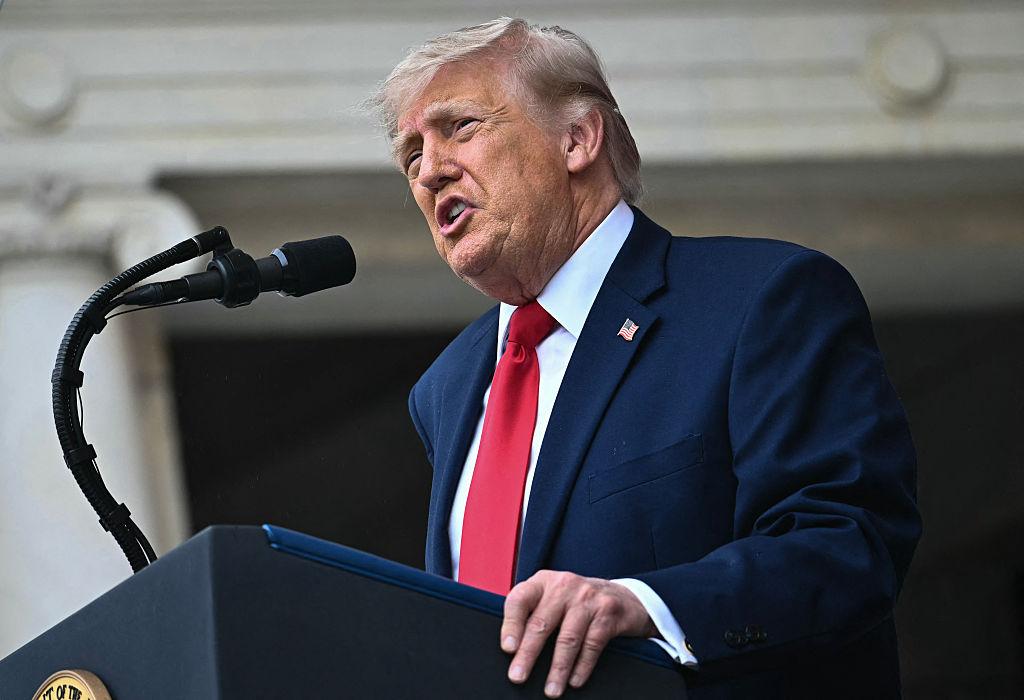
President Donald Trump is suddenly taking losses from his own friends and allies, especially on Capitol Hill.
GOP lawmakers are bucking Trump on his White House ballroom, shelving plans to spend $1 billion to secure the new facility and other areas of the presidential compound.
The “Trump battleships” are steaming into a wave of skepticism at the House Armed Services Committee as lawmakers prepare to mark up the FY2027 defense authorization bill this week. (All puns intended.)
The House may vote this week on a discharge petition for a Ukrainian aid bill that Trump is certain to oppose. Several dozen House Republicans could back the measure anyway.
And after Trump — bogged down in negotiations to end the war with Iran — said Israel had agreed to halt its military assault against Hezbollah in Lebanon, Israeli Prime Minister Benjamin Netanyahu declared he’d continue IDF operations in the southern part of the country. Trump reportedly yelled at Netanyahu over the offensive.
Most prominently, Republicans are also in the process of killing Trump’s $1.8 billion “anti-weaponization” fund, a direct rebuke to the president.
Trump and Hill Republicans are trapped in a dangerous paradox. Trump’s political endorsement is worth more than ever in GOP primaries, yet his legislative agenda and fixation on personal projects are growing more toxic heading into the fall campaign season. As more Republicans move past their primaries, they’re suddenly finding it advantageous to oppose him.
Weaponization-lite. Senate Republicans remain far short of the votes needed to begin floor consideration of their $70 billion reconciliation bill to fund ICE and Border Patrol. GOP leaders will make a decision today about whether it’s possible to pass the bill this week, but that’s looking increasingly unlikely.
At least a dozen GOP senators said Monday that the White House’s attempt to quell the uproar over Trump’s “anti-weaponization” fund wasn’t enough to win their support for advancing the immigration-centric package — something that should unify them.
In a statement, the Justice Department vowed to honor a federal judge’s approval of a temporary restraining order that paused the fund until June 12. But the statement said nothing about how the administration would handle the fund beyond that deadline.
What GOP senators are asking for is pretty basic — assurances that this fund is gone for good.
“The only thing that’s going to solve this problem — to get immigration funded and law enforced — is for the president to do away with the weaponization fund,” Senate Judiciary Committee Chair Chuck Grassley (R-Iowa) told us.
“It’s not enough for me to have the courts push back,” added Sen. John Curtis (R-Utah). “I just want to make sure this thing doesn’t move forward in its current form.”
Senate GOP leaders can’t afford to lose more than three senators on any vote throughout the floor process. Sen. Lisa Murkowski (R-Alaska) suggests she could vote “no” on final passage, regardless of how the “anti-weaponization” fund is addressed. Murkowski remains concerned about funding federal agencies outside the appropriations process.
Still simmering. Senate Republicans made clear that the week-long Memorial Day recess did little to calm their recent tensions with Trump, which have centered on both the weaponization fund and the party’s broader midterm strategy.
Republican senators revolted over Trump’s fund two weeks ago. Senate GOP leaders have since pleaded with the White House to find a solution so they can move forward with reconciliation. Yet it was Speaker Mike Johnson who met with Trump at the White House on Monday to discuss the issue. Hours later, the Department of Justice released its statement.
Senate Majority Leader John Thune, who has made no secret about his frustrations with the president lately, said Monday afternoon that he hadn’t spoken with Trump about the fund since last week. Thune noted that he was in touch with White House officials over the weekend.
Thune approached the DOJ statement delicately but ultimately acknowledged that his rank-and-file GOP senators weren’t yet satisfied. Thune said more public assurances from the administration would be “helpful.”
The South Dakota Republican is practically begging the administration to act on its own to shut down the fund entirely and make clear it won’t be resurrected. Thune believes this remains the best way to un-stick the reconciliation bill and prevent a handful of GOP senators from voting for Democratic amendments during an upcoming vote-a-rama.
But the White House seems unwilling to make this easy for Republicans. Administration officials are leaving GOP leaders guessing about whether they plan to say more about the program later on.
“They need to settle it,” said Sen. James Lankford (R-Okla.), a member of Thune’s leadership team. “They need to say what they actually mean and say, ‘We’re setting this whole thing aside.’”
Thune wants to avoid addressing the issue in the text of the reconciliation bill itself. Doing so would also make it easier for Democrats to cause problems for GOP leaders during the upcoming reconciliation vote-a-rama, which requires only a simple majority for their amendments to pass.
“Confining the bill to its original intent, which was a very narrowly focused reconciliation bill that just addresses the funding for [ICE and CBP], is the clearest path to ultimately getting a bill on the president’s desk,” Thune said.
To that end, Thune also said a $1.5 billion fund for the Justice Department — intended for a wide range of DOJ projects — will be dropped from the bill. That could make it more difficult for Democrats to craft amendments going after Trump’s fund at a simple-majority threshold.
The move also alleviates concerns that the administration would try to divert this money to the weaponization fund. But scrapping the DOJ funding isn’t a solution on its own.
FYSA. Sen. Bernie Sanders (I-Vt.) said he is introducing legislation to have the government take a 50% stake in AI companies.
— Andrew Desiderio, Laura Weiss, John Bresnahan and Jake Sherman
NEXT WEEK: We’re sitting down with Sen. Rick Scott (R-Fla.) on Tuesday, June 9, at 8:30 a.m. ET. to discuss the news of the day and increasing competition around generic and biosimilar drug development. We’ll also be joined by David Marin, president and CEO of PCMA, for a fireside chat. RSVP here!


WASHINGTON X THE WORLD
Dems have too many Rubio targets
Secretary of State Marco Rubio will face a barrage of pointed questions when he appears before his former Senate colleagues today — but it’s unclear if any of those lawmakers will be able to hit their mark.
Senate Democrats are grappling with a recurring problem as they prepare to grill Rubio before the Foreign Relations Committee at 10 a.m. — there are too many issues they want to ask him about.
In conversations on Monday with a handful of Democratic senators on the panel, there was no consistent throughline heading into what is ostensibly a hearing about the State Department’s FY2027 budget request. Lawmakers name-checked everything from Cuba to Lebanon, Iran, Ukraine, China and an emerging Ebola outbreak as priorities.
“I’m looking at a lot of options right now,” said Sen. Chris Van Hollen (D-Md.). “This administration’s foreign policy has been a disaster for the country, so there’s a lot to look at.”
There is one thing they all agree on: Iran will come up. It’s just not clear who will force the discussion.
“The State Department part of it is the negotiation to try to find some kind of a ceasefire or larger deal, so there will be questions about that,” Sen. Tim Kaine (D-Va.) said.
Rubio’s Hill appearances this week — Tuesday before the Foreign Relations Committee and a House Appropriations subpanel, followed by a pair of hearings on Wednesday — come at a critical point in the Middle East conflict. Rubio will publicly address a Congress that’s potentially on the brink of formally and bicamerally rebuking the administration’s military posture toward Iran.
The Senate recently voted to advance a war powers resolution reining in President Donald Trump’s operations in the region. And the House is on the verge of doing the same thing this week, unless GOP leaders can minimize Republican absences and defections.
Rubio will also have to deal with national security hawks who are already extremely skeptical of Trump’s dealmaking with Iran.
“I personally don’t think even if there were some negotiated agreement with the Iranian regime that you could trust them to comply with it,” Sen. John Cornyn (R-Texas) said.
Any Iran commentary will be closely followed well outside of the committee. Sen. Roger Wicker (R-Miss.) said Monday evening his questions on the situation are “too numerous to mention at this point.”
Western Hemisphere focus. Expect some Republican committee members to center their time on the United States’ next steps in Venezuela and Cuba.
“I just want to know: are we going to hold Delcy Rodríguez accountable, because she’s clearly not doing what she said. She’s not releasing all the political prisoners,” Sen. Rick Scott (R-Fla.) said. “And are we going to arrest Raúl Castro? I’m glad he got indicted, now I want him arrested.”
One wild card? Sen. Rand Paul (R-Ky.), who has consistently bucked his party to support various war powers efforts and has criticized the administration’s military adventurism.
“You’ll have to come to find out,” Paul said coyly when asked about his questions for Rubio.
— Briana Reilly and Anthony Adragna
PRESENTED BY PCMA

Pharmacy benefit managers reduce prescription drug spending by $300 billion each year by negotiating lower drug prices and finding savings for people like you.
PRIMARY PROBLEMS
Inside a big primary day
Today is a huge primary day, spanning six states: California, New Jersey, Montana, South Dakota, New Mexico and Iowa.
Both parties will land nominees in key House districts. Democrats will settle a contentious Senate battle in Iowa. The large field vying to replace former Speaker Nancy Pelosi in her San Francisco-based seat will winnow down to two.
Today will also settle a host of questions. Will a mysterious super PAC successfully meddle in the Democratic primary for Rep. Tom Kean’s (R-N.J.) seat? Can the DCCC get its preferred candidate to take on Rep. David Valadao (R-Calif.)?
Here’s what we’re tracking.
California. The California gubernatorial primary is the most important race of the day, with former Rep. Xavier Becerra (D-Calif.) in a strong position to advance to the general election. Republican Steve Hilton and billionaire Democrat Tom Steyer are battling to finish in the top two.
House Democrats are eager to flip the 22nd and 48th districts, but they have bitter primaries in both seats. In the Central Valley, the DCCC is backing state Assemblymember Jasmeet Bains over progressive Randy Villegas, a move that has angered Latino leaders. One of them is likely to join Valadao in the top two.
In the open 48th District, three top contenders are the CPC PAC-backed Ammar Campa-Najjar, San Diego City Councilmember Marni von Wilpert and Republican Jim Desmond. Pro-Israel DMFI PAC is spending heavily to elect von Wilpert. President Donald Trump’s endorsement of Desmond helped consolidate the GOP behind him, easing fears of a Democratic shutout.
Other notable races: Rep. Kevin Kiley (I-Calif.) is running in the new 6th District in a crowded field that includes Sacramento County District Attorney Thien Ho, physician Richard Pan and Planned Parenthood official Lauren Babb Tomlinson.
In Pelosi’s seat, San Francisco Supervisor Connie Chan, state Sen. Scott Wiener and Saikat Chakrabarti, a former congressional aide, are the leading Democrats vying for the top two slots. Pelosi endorsed Chan.
There’s also a special election for the late Rep. Doug LaMalfa (R-Calif.), but it’ll likely extend into an August runoff if no one gets more than 50% of the vote.
New Jersey. Real Change PAC, a mysterious pop-up group with ties to the GOP, has spent some $650,000 to try to thwart Democrat Rebecca Bennett in the 7th District primary and boost her rivals, Tina Shah and Brian Varela. Bennett is likely still the favorite to take on Kean. Trump endorsed Kean on Monday night despite the GOP lawmaker’s mysterious absence from public view for months.
And in the open 12th District, a crowded field is competing to replace Rep. Bonnie Watson Coleman (D-N.J.). The top contenders are surgeon Adam Hamawy and organizer Sue Altman.
Iowa. State Rep. Josh Turek and state Sen. Zach Wahls are facing off in the Democratic Senate primary for a chance to take on Rep. Ashley Hinson (R-Iowa) in the general election. Turek has had millions of dollars in outside help and is the favorite here.
Rep. Mariannette Miller-Meeks (R-Iowa) faces a right-wing primary challenge but is expected to survive. And there’s a crowded Iowa GOP gubernatorial primary, but Rep. Randy Feenstra (R-Iowa) got Trump’s endorsement and is in the driver’s seat.
— Ally Mutnick and Max Cohen
PRESENTED BY PCMA

PBMs save the average American more than $1,000 each year.
THE SENATE
Platner’s supporters unmoved by sexting revelations
Despite a damaging weekend of headlines about Graham Platner’s alleged infidelity, his Senate Democratic allies are sticking by their presumptive candidate to take on GOP Sen. Susan Collins in the critical Maine battleground.
Democrats dismissed reporting by the New York Times and Wall Street Journal that Platner’s wife flagged to the campaign that she’d discovered sexual texts that Platner sent to multiple women during their marriage.
Platner’s endorsers have already stuck by the Democrat after a storm of negative news cycles surrounding Platner’s Totenkopf tattoo and offensive Reddit posts. Their support isn’t waning, even with the prospect of more revelations to come.
“We all know that he’s lived a very, you know, real experience,” Sen. Ruben Gallego (D-Ariz.) said of Platner. “The voters of Maine are going to decide what they’re going to do, but at this point, this man can still win the race, and as long as he continues, I think we’ll all be there.”
But there’s an even bigger reason Democrats are standing by Platner: They have no path to the Senate majority without defeating Collins, a Republican they’ve long failed to topple.
Platner is scheduled to meet with a group of Democratic senators in D.C. this afternoon ahead of some fundraisers. The meeting was scheduled long before the recent sexting revelations.
A common theme we heard from Democrats was that Platner’s marriage didn’t deserve to be litigated on the campaign trail.
“That’s between Graham and Amy,” Sen. Martin Heinrich (D-N.M.) asserted, referring to Platner’s wife, Amy Gertner.
Sen. Elizabeth Warren (D-Mass.) said she was concerned about the price of gasoline, not Platner’s texts.
“Maybe as a nation we focus on issues more important than the Platner marriage,” Sen. Bernie Sanders (I-Vt.) said.
The DSCC and Senate Minority Leader Chuck Schumer initially backed Maine Gov. Janet Mills in the Democratic primary. But after Mills failed to gain traction, she suspended her Senate bid a month ago. However, Mills noted on Monday that “I am still on the ballot” for next week’s primary.
– Max Cohen
📆
What we’re watching
Senate. Secretary of State Marco Rubio will testify today in front of the Senate Foreign Relations Committee.
Homeland Security Secretary Markwayne Mullin will testify before the Senate Appropriations Committee.
House. Rubio will also be at a House Appropriations subcommittee, as will Acting Attorney General Todd Blanche.
The House has no votes today, but members come in at noon and have legislative business at 2 p.m.
Washington. Mehmet Oz, the CMS administrator, will brief reporters in the White House Press Briefing Room at 1 p.m. President Donald Trump will pre-tape an interview at 3 p.m.
– Jake Sherman
… AND THERE’S MORE
Here’s something unusual: House Majority PAC and Maine state Sen. Joe Baldacci have set up a joint fundraising committee.
That JFC, the Baldacci Victory Fund, just purchased $157,000 worth of TV ads to boost Baldacci in the crowded 2nd District Democratic primary next Tuesday.
How does this work? HMP is a hybrid PAC. That means it has both a traditional PAC, subject to contribution limits, and a super PAC without those limits that can make independent expenditures.
This JFC is between HMP’s traditional PAC and the Baldacci campaign, and is therefore subject to contribution limits. But HMP’s PAC can legally coordinate with Baldacci on these ads and buy them at the lower candidate rate.
“With deep roots in Maine and a strong record of standing up for working families, HMP firmly believes that Joe Baldacci will defeat scandal-plagued Paul LePage,” HMP spokesperson CJ Warnke said.
Ad news. Democrat Jessica Killin, who’s running in Colorado’s 5th District, is airing her first TV ad of the campaign. The $207,000 buy highlights Killin’s military service.
– Ally Mutnick

Presented by Cencora

From accelerating innovation to powering the pharmaceutical supply chain, we reduce barriers to expand access to medications for millions of Americans at sites of care in their communities. Learn more

Crucial Capitol Hill news AM, Midday, and PM—5 times a week
Join a community of some of the most powerful people in Washington and beyond. Exclusive newsmaker events, parties, in-person and virtual briefings and more.
Subscribe to Premium
Special Projects
Explore our deep dives into the issues that matter the most today and will shape tomorrow's future, with expert reporting that goes beyond the headlines and into the heart of the Capitol.
Check it outEvery single issue of Punchbowl News published, all in one place
Visit the archive
Presented by Cencora
From accelerating innovation to powering the pharmaceutical supply chain, we reduce barriers to expand access to medications for millions of Americans at sites of care in their communities. Learn more