

December 10, 2025



PRESENTED BY

THE TOP
Hill resists as Trump seeks changes to defense spending
Happy Wednesday morning.
There’s lots happening today in Washington. Congress is grappling with the looming Obamacare cliff, which could mean the loss of health-care coverage for millions of Americans or huge premium hikes. The Federal Reserve is poised to cut interest rates again. The Pentagon continues to deal with the fallout from President Donald Trump’s administration’s deadly attacks on alleged drug smugglers tied to Venezuela.
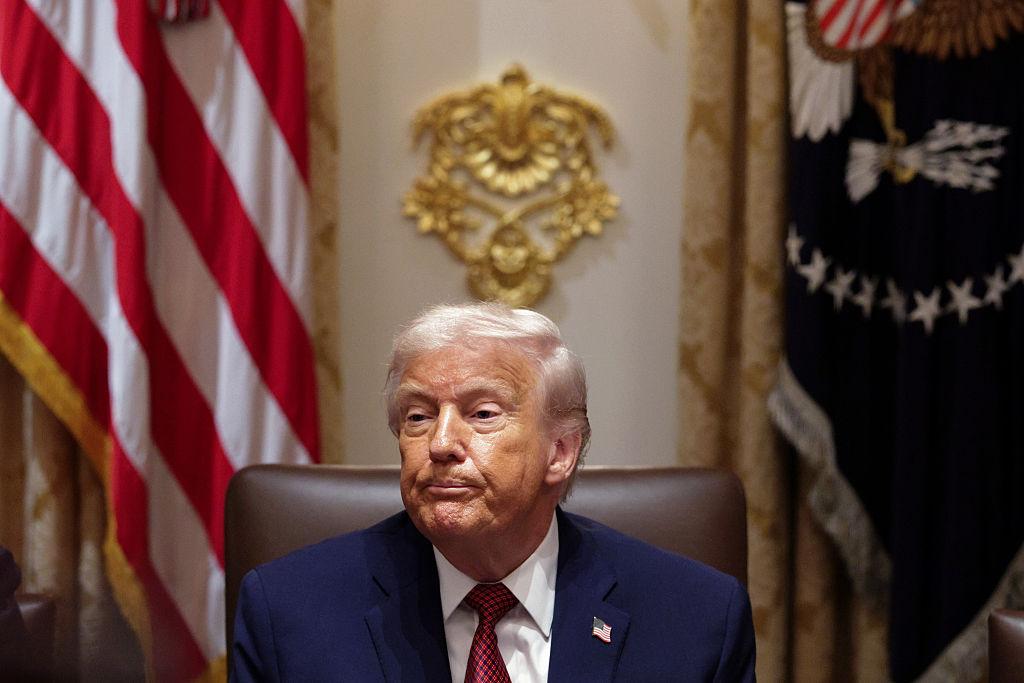
Yet in a move that isn’t getting the attention it should, the White House has left the door open to once again boosting military spending next year by a party-line vote in Congress, a dramatic shift from longstanding practice.
Over the weekend, OMB Director Russ Vought proclaimed that Trump and GOP congressional leaders could once again increase defense spending using the reconciliation process. This threatens one of the few remaining areas of bipartisan consensus on Capitol Hill — how much to spend annually on the American military.
The continued use of reconciliation as a means to fund the Pentagon would sidestep the Senate’s 60-vote threshold for passage and further weaken the power of appropriators already under heavy pressure from the White House. Defense authorizers are responsible for shepherding reconciliation measures through Congress.
And of course, this is an effort to cut away at the power of Hill Democrats. If the House flips in 2026, Trump will have to bargain with Democrats on every legislative topic. If the administration uses reconciliation in 2026 to boost defense spending, it may be their last opportunity to do so.
Top defense lawmakers want to see this shut down.
“I would prefer to use the regular appropriations process,” Senate Armed Services Committee Chair Roger Wicker (R-Miss.) told us.
“A reconciliation bill is not how we ensure defense spending going forward,” added Sen. Lisa Murkowski (R-Alaska), a senior defense appropriator. “That’s what we do in appropriations.”
Sen. Jack Reed (R.I.), the Senate Armed Services Committee’s top Democrat, warned against going down a party-line path to fund national defense, arguing it will set a dangerous precedent for future presidents to follow:
The pushback came after Vought pledged at the Reagan National Defense Forum over the weekend that defense spending would continue to increase, but possibly through another Republican-controlled reconciliation bill. Meaning this could be done without Democratic votes.
GOP leaders and Trump previously funneled $150 billion to the Pentagon under the One Big Beautiful Bill Act. The bill included investments in a variety of priorities ranging from shipbuilding and munitions production to Trump’s push to build a “Golden Dome” anti-missile shield covering the United States.
Vought said the use of reconciliation is a “paradigm shift” for military funding and “a lesson for how we can ensure that defense increases are not hamstrung by the rest of the national agenda, by some that are on the other side.”
The Trump administration is using a bifurcated approach to fund the military in FY2026: a sprawling reconciliation package and the base defense budget. Taken together, officials say Pentagon spending will top $1 trillion for the first time.
Yet leading defense hawks have argued that the White House’s nearly $893 billion base budget request for the Department of Defense, which would keep national security spending flat relative to FY2025, is a funding cut.
Sen. Chris Coons (Del.), the top Democrat on the Senate Appropriations Committee’s Defense subcommittee, slammed what he called “the profoundly dysfunctional approach” Vought and White House officials have taken for funding the Pentagon.
Leveraging reconciliation, Coons told reporters over the weekend, has created “tens of billions of dollars of misalignments” between OBBB and the base defense budget. Meanwhile the Defense Department has yet to submit its full reconciliation spending plan to Congress.
“I hope [Vought] will abandon efforts to destroy the mechanisms by which the Senate achieves a bipartisan annual defense appropriations bill,” Coons said.
Pro Vought. Vought’s tough talk is getting back up from some conservatives in Congress.
“We’ve got to do whatever is the effective methodology,” House Armed Services Committee Chair Mike Rogers (R-Ala.) said. “This year, [reconciliation] was effective, and it may be effective again next year.
Sen. Rick Scott (R-Fla.), who serves on SASC, was bullish on the approach too. “If that’s the way we have to do it, that’s the way we have to do it,” he said.
NDAA update. The House Rules Committee approved a rule for considering the annual defense bill late Tuesday, though it’s unclear if GOP leaders can successfully take that path or whether they’ll have to consider the legislation under suspension of the rules, which would require two-thirds of the chamber’s support.
There’s plenty of grumbling about the final NDAA product — there always is — but little indication of a mass rebellion that could tank the whole must-pass package.
Rogers projected confidence the House could pass the rule for the NDAA — “We’ll be fine. I’m an optimistic guy” — but said it would move under suspension, if necessary. The White House backed the bill in a Statement of Administration Policy on Tuesday.
House Minority Leader Hakeem Jeffries said it “remains to be seen” if Democrats would provide enough votes to pass the NDAA should Republicans try to pass it under suspension.
This is news. Separately, Democrats on the Senate Armed Services Committee wrote to the Navy secretary to express “serious concerns” about the investigation into Sen. Mark Kelly (R-Ariz.).
U.S. Defense Secretary Pete Hegseth has ordered the Navy to complete its review of Kelly by today. The retired Navy captain faces the threat of being recalled and court-martialled depending on the outcome.
— Anthony Adragna and Briana Reilly
Enjoying your daily fix of Punchbowl News? Bring Washington’s must-read to your friends, family and colleagues by sharing this link to subscribe to our free AM newsletter.


THE SENATE
Don’t bank on January health care deal
Senators seeking to cut a deal addressing the year-end Obamacare subsidy cliff are already looking beyond this week’s designed-to-fail messaging votes, hoping a bipartisan agreement can come out of the partisan clash.
Instead, the Senate’s “show” votes on Thursday are more likely to usher in a different reality — that there may be no path to a deal at all come January, the earliest the Senate could feasibly pass bipartisan legislation.
Yes, the enhanced Obamacare premium tax credits will have lapsed by then. And there’s been zero White House involvement in how to avoid a huge premium price hike or loss of coverage for millions of Americans. But those are far from the biggest obstacles.
Senate Democrats are in no mood to come off their position — a clean three-year subsidy extension — and will be even more hardline come 2026, when they’ll be hammering vulnerable Republicans on the issue.
There’s also the intractable partisan divide over restrictions on funding for abortion services. For Republicans, that’s non-negotiable — and it’s included in their bill, which directs new funding toward health savings accounts.
GOP senators received handouts during their Tuesday lunch meeting that included arguments from Susan B. Anthony Pro-Life America.
“It’s off the table. They know it damn well,” Senate Minority Leader Chuck Schumer said. “But because they can’t come up with any real solution… they put this non-starter language in.”
Perhaps the most daunting impediment is that this Congress simply isn’t built to cut a major bipartisan deal on health care, one of the trickiest policy areas. That’s especially true after a year that saw Republicans muscle through a party-line tax bill and Democrats trigger a record-breaking government shutdown.
Senate challenges. Many Republicans acknowledge that any bipartisan effort would require, at the very least, a short-term extension of the Obamacare subsidies.
Senate Majority Leader John Thune said of a short-term Obamacare extension: “I don’t know that that would ever end up being a landing spot, but I think it’s part of the broader conversation.”
For Thune, a chief consideration is that his conference is so deeply divided. The same is true for Schumer, who has to consider his own weaker standing among his Democratic colleagues following this year’s government-funding fights. It’s unlikely any health-care bill can pass with 50-plus Republicans and just a handful of Democrats.
So if neither leader is comfortable with legislation that divides their party, that makes it especially difficult to find a sweet spot.
“Everything always revolves around the majority [party] plus whatever it takes to get to 60, and I just think that’s not the way to go,” said Sen. Kevin Cramer (R-N.D.). “Maybe you get a more conservative outcome. But it creates a lot of havoc and chaos rather than a good bipartisan bill.”
In House news. Reps. Jen Kiggans (R-Va.) and Josh Gottheimer (D-N.J.) are introducing a bill to extend the subsidies for a year with income limits and anti-fraud measures, per text we’ve obtained. It also stipulates a 2026 vote on next steps for premium relief.
Around two dozen House members are expected to cosponsor the bill.
House GOP leaders are expected to brief members on health care plans at their conference meeting this morning. But the Republican leadership’s push to assemble a package hasn’t placated GOP moderates, who are eyeing discharge petitions to try to force floor action. That would be a long shot.
“This is an important enough issue on moral grounds. The right thing to do for our people,” Rep. Jeff Van Drew (R-N.J.) said. “And on political grounds — if Republicans put their thinking caps on — health care is a real big deal.”
— Andrew Desiderio and Laura Weiss


The Vault: A battered Fed looks to a hazy 2026
The Federal Reserve is expected to lower interest rates by 25 basis points today. After that, the trajectory of rates — and what happens with the U.S economy they’re trying to shape — is anybody’s guess.
The economic outlook hasn’t shifted dramatically in recent weeks. The U.S. labor market has cooled and inflation remains somewhat elevated. Cutting interest rates today will signal that the Fed is more worried about American jobs than inflation.
Lawmakers are happy to see rates fall, even as they’re worried about what comes next. Multiple senators told us they were hopeful lower rates would translate to cheaper mortgages soon.
“The signal to housing and those that want to buy homes — it’s just going to be important to encourage them,” Sen. Cynthia Lummis (R-Wyo.) said.
Data, data, data. This will be the second time since October that the Federal Open Market Committee has convened against the backdrop of delayed or missing economic data due to the record 43-day government shutdown.
Policymakers and investors will scrutinize the heck out of Chair Jay Powell’s remarks after the FOMC announces its interest rate decision. But if Powell’s comments are anything like the last FOMC meeting, he’ll stress the uncertainty of this moment.
Even some of the Fed’s fiercest critics are sympathetic about the position the U.S. central bank finds itself in.
“Persistent inflation combined with a softening job market, and a lack of clear data, creates a lot of uncertainty for the Fed,” Sen. Elizabeth Warren (D-Mass.) said.
But others are more bullish. Sen. Bill Hagerty (R-Tenn.), a close ally of the White House, said he still saw the case for rate cuts well into 2026.
“I see the trends — all in the near, medium and long-term — moving in the direction of lower inflation. At the same time, we’ve seen softer numbers in terms of manufacturing output and private sector payrolls,” Hagerty said.
In trade news. Many of the Democrats on the House Ways and Means Committee are expected to support three-year extensions of expired trade programs for sub-Saharan African countries and Haiti in a markup this morning.
Ways and Means Democrats huddled privately after House votes Tuesday night and emerged largely ready to back the GOP bills — despite heavy opposition from labor unions who oppose the reauthorizations without Trade Adjustment Assistance. A few Democrats may vote no over TAA.
Ways and Means Republicans are trying to build momentum to extend the programs — AGOA and Haiti HOPE/HELP — in a legislative vehicle, potentially in January.
— Brendan Pedersen and Laura Weiss
PRESENTED BY WELLS FARGO

Wells Fargo has donated over $2 billion to strengthen local communities over the last 5 years. See how.
PUNCHBOWL NEWS EVENTS
Punchbowl News Defense launch

On Tuesday night, we hosted an event celebrating the launch of Punchbowl News Defense featuring networking, light bites and a fireside chat about the future of defense policy. During the event, Punchbowl News Founder & CEO Anna Palmer sat down for a conversation with Boeing’s EVP of Government Operations, Global Public Policy & Corporate Strategy Jeff Shockey. Thank you to Boeing for partnering with us on this event.
Raising a glass: Sen. Deb Fischer (R-Neb.); Rep. Rob Wittman (R-Va.); Suzanne Wrasse and Allison Aprahamian of the Senate Foreign Relations Committee; Evan Dixon of the House Budget Committee; Benjamin Stanislawski of Rep. Ritchie Torres’ (D-N.Y.) office; Eric Sejer of Sen. John Curtis’ (R-Utah) office; James Adams of Rep. Josh Gottheimer’s (D-N.J.) office; and Eliza Ramirez of Sen. Ruben Gallego’s (D-Ariz.) office.
Wyndee Parker of House Minority Leader Hakeem Jeffries’ office; J.C. Lintzenich of Sen. Thom Tillis’ (R-N.C.) office; Jackie Olvera and Matthew Calogero of Rep. Morgan Luttrell’s (R-Texas) office; Luke Bishop of Rep. Betty McCollum’s (D-Minn.) office; Aidan Curran of Rep. Seth Moulton’s (D-Mass.) office; Li Chen of the Embassy of Taiwan; Farah Al Hinai and Nasreen Al Hinai of the Embassy of Oman; and Lindsay Leonard, Tom McLemore, Bill McSherry, Allison Melia, Betsy Stewart, and Erin Thomas of Boeing.
AND THERE’S MORE…
Labor vote. Rep. Jared Golden (D-Maine) has formally requested a floor vote on his discharge petition nullifying an executive order from President Donald Trump that bars collective bargaining by federal labor unions.
Led by Rep. Brian Fitzpatrick (R-Pa.), a total of five House Republicans have signed onto the discharge petition, giving the measure 218 backers and allowing it to come to the floor despite opposition from House GOP leaders. Republican leaders have two legislative days to schedule the vote. That could take place as early as Thursday, although the timing is still fluid. We’ll have more on this in our Midday edition.
Big day for letters. A coalition of nearly 200 liberal groups urged every U.S. senator on Tuesday afternoon to oppose any piece of legislation “that fails to meaningfully address the crypto industry’s many systemic failures and harms.” The letter, which you can read here, was signed by groups including the American Economic Liberties Project, Better Markets, Communications Workers of America, Demand Progress, Public Citizen, Our Revolution and the Tech Oversight Project.
More inbound. A separate coalition representing Hispanic, Black, Asian and LGBTQ+ commerce organizations urged members of the Senate Banking Committee to expand the prohibition on stablecoin yield in market structure talks. Groups including the U.S. Hispanic Chamber of Commerce, U.S. Black Chambers, Inc. and others said failure to do so would have “profound consequences” for community banks and their business partners. Read it here.
Endorsement news: EMILYs List is endorsing Bridget Brink in the Democratic primary for Michigan’s 7th District, a top flip opportunity for Democrats.
— John Bresnahan and Brendan Pedersen


Premium+ Defense is live 
We’ve launched Defense! Our newest Premium+ coverage area takes you deeper into this rapidly evolving industry. From defense tech to appropriations, national security strategy, the military’s role domestically, aerospace and more, Punchbowl News Defense will be your go-to read.

Crucial Capitol Hill news AM, Midday, and PM—5 times a week
Join a community of some of the most powerful people in Washington and beyond. Exclusive newsmaker events, parties, in-person and virtual briefings and more.
Subscribe to Premium
The Canvass Year-End Report
And what senior aides and downtown figures believe will happen in 2023.
Check it outEvery single issue of Punchbowl News published, all in one place
Visit the archive
Premium+ Defense is live
We’ve launched Defense! Our newest Premium+ coverage area takes you deeper into this rapidly evolving industry. From defense tech to appropriations, national security strategy, the military’s role domestically, aerospace and more, Punchbowl News Defense will be your go-to read.