The national security challenges facing Congress just keep piling up. And they couldn’t come at a more decisive moment — with the Trump administration pushing to upend decades of defense policy at the same time.
To name a few:
— A defiant, unconventional defense chief is under a bipartisan, bicameral investigation for his handling of the strikes on alleged drug boats in the Caribbean that many experts say are illegal.
— The newly-unveiled National Security Strategy softens language on China — no longer referring to the country as the chief U.S. rival — and slams Europe as on a path to being “unrecognizable.” Both positions split GOP defense hawks.
— The Trump administration continues to pursue an end to the Ukraine-Russia conflict, which worried lawmakers argue is too favorable to Moscow. President Donald Trump’s Middle East peace deal is holding, but the conflict has sparked broader questions among voters over the U.S.-Israel relationship.
— Republican and Democratic lawmakers complain that Trump’s national security officials are leaving them in the dark about key decisions, including on troop deployments, until after they’re made.
— The FBI has launched an investigation into six Democratic lawmakers who filmed a video advising servicemembers to ignore illegal orders, as the Pentagon mulls the court marshall of a sitting senator.
“When the United States and our governing structures are sound and solid, I think that that gives not only the country comfort, but the free world comfort. And it just seems like things are jumbled right now,” said Sen. Lisa Murkowski (R-Alaska), a senior defense appropriator.
At the forefront. Increasingly, Republicans must confront whether they want to reassert their authority on defense policy and risk Trump’s ire.
Members of both parties have expressed discomfort with how the Trump administration is running defense policy, leading to bipartisan Senate floor votes on authorizing war actions and bicameral steps to scrutinize the Pentagon.
Here’s Sen. Todd Young (R-Ind.):
To date, Republicans have not publicly broken from Defense Secretary Pete Hegseth despite a string of high-profile controversies. Tellingly, key Republicans have only offered tepid praise when asked if they still have faith in Hegseth’s leadership.
“He serves at the pleasure of the president,” Senate Majority Leader John Thune said last week.
All of this is before you even get to Capitol Hill’s annual responsibilities of maintaining and overseeing the nearly $1 trillion annual military budget. The Pentagon and lawmakers also want to significantly overhaul the decades-old dominance of major defense contractors (more on that below) and have to get the NDAA over the finish line in Congress amid this host of challenges.
Lawmakers released their 3,086-page final compromise version of the annual defense policy bill over the weekend, teeing up the legislation for floor consideration.
“The news of the day and the controversies of the day … we don’t want that to get in the way of getting the NDAA done,” Sen. Tim Kaine (D-Va.) said. “We pretty successfully kept the controversies away from getting this work product done.”
Nowhere to hide. The current deluge of national security news has thrust defense committee leaders into the spotlight.
Leading defense hawks have launched a bipartisan investigation into reports that U.S. forces were ordered to double-strike an alleged drug boat, securing classified briefings for key lawmakers in both chambers. And lawmakers finally got their hands on a Pentagon IG report last week about Hegseth’s use of Signal to share military plans.
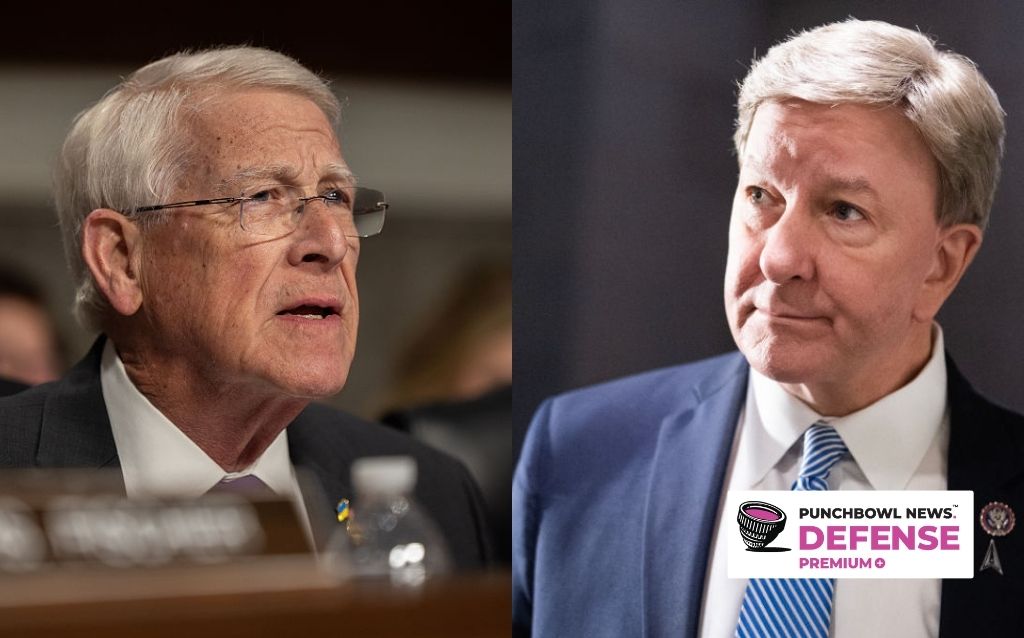
Sen. Deb Fischer (Neb.), a senior Republican on the Senate Armed Services panel, praised the committee’s efforts and those of Chair Roger Wicker (R-Miss.) for meeting the moment.
“We want to have a good relationship with the department, obviously, with the administration,” Fischer said. “It’s how we can be able to help the department on priorities that they set, that they are also following that Congress sets, to keep the country safe.”
Lawmakers are also using the NDAA to assert congressional control over the Defense Department. For example, the compromise bill text would direct Hegseth to hand over “unedited video” of the boat strikes in the Caribbean and East Pacific or risk losing 25% of his travel budget.
The limits. What’s clear is that regardless of what Republicans do over the next year, Democrats will make Hegseth’s tenure at the Pentagon a key focus of their oversight agenda if they take the House or Senate following the midterm elections.
In the meantime, Democrats must rely on Republican help to keep up the heat on their oversight requests.
“From an oversight perspective, there’s going to be a lot to do. And we are prepared to do it all,” House Minority Leader Hakeem Jeffries recently said on “Pod Save America.”