


May 11, 2026



PRESENTED BY

THE TOP
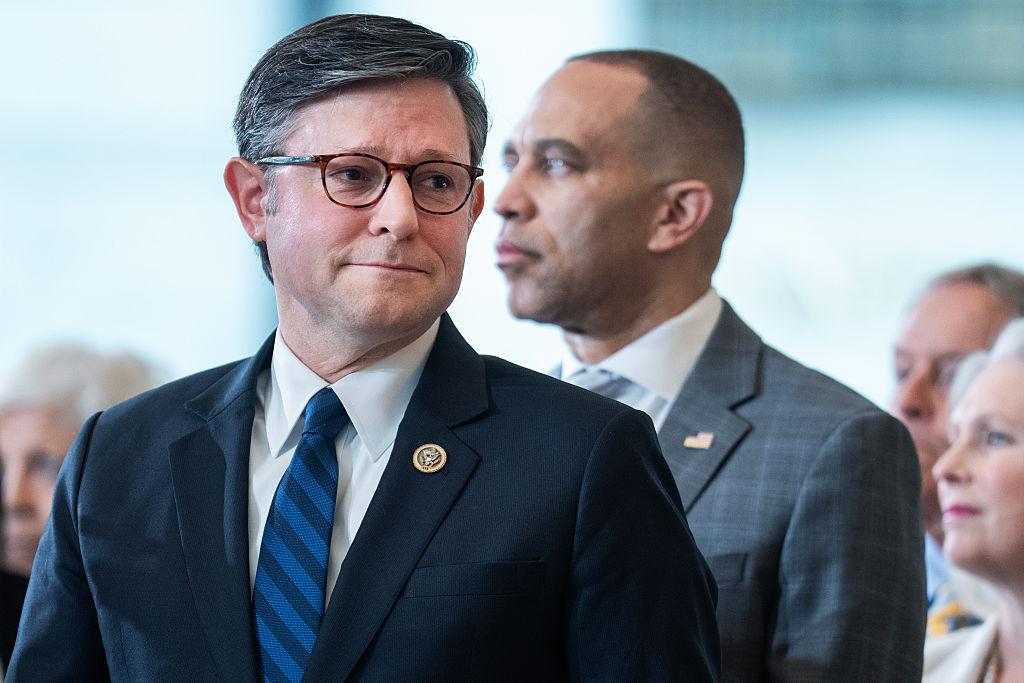
Where Johnson and Jeffries are post Virginia, VRA
Happy Monday morning.
The Washington Wizards have the No. 1 pick in the NBA draft. The Senate is back in session today. The House returns Tuesday following a brief but historic recess.
House Republicans got two monumental legal wins that could help them limit their losses in November — or even help them keep their endangered majority. More on that in a moment.
President Donald Trump will head to China this Tuesday in what could be a hugely consequential trip amid the U.S. war with Iran. He’ll meet in person with Xi Jinping for the first time in almost seven months.
Trump is bringing a group of CEOs to Beijing as he seeks progress on trade and economic issues. What the president really needs is Xi’s help in ending the chaotic Iran war and reopening the Strait of Hormuz. Trump rejected an Iranian offer on Sunday. But what will Xi want for that, and what does it mean for the rest of the globe, particularly Taiwan? The House will pass a resolution this week pressing Trump to bring up political prisoners with Xi, including jailed activist Jimmy Lai.
Johnson and Jeffries. But we start this week, as we often do during the 119th Congress, with Speaker Mike Johnson and House Minority Leader Hakeem Jeffries.
The two leaders enter this two-week session — yes, they’re out for another 11 days for Memorial Day — with drastically shifting fortunes.
When Johnson left Washington for the week-long recess, he was coming off a bruising legislative period during which House Republicans were able to squeeze through an immigration-related budget resolution, a short-term FISA extension and a farm bill. It was a win for Johnson, although a limited one.
Yet the strong sense was that House Republicans would lose their majority.
Democrats had fought Republicans to a draw in the national redistricting battle. GOP retirements are at a record high. Trump’s approval ratings are in the 30s, devastating for vulnerable House Republicans. Trump’s deeply unpopular war with Iran shows no sign of ending anytime soon. Inflation and affordability are the country’s biggest political issues, and gas prices are now above $4.50 per gallon nationwide.
Johnson and GOP congressional leaders haven’t done anything on healthcare even as millions of Americans lose their coverage. GOP Reps. Cory Mills (Fla.), Chuck Edwards (N.C.) and Max Miller (Ohio) all face serious ethics or personal problems that are getting national headlines.
Yet the Supreme Courts in Washington and Richmond changed the entire election cycle with two blockbuster decisions. For Johnson and House Republicans, this was a second chance, of sorts.
We told you that as many as 10 House seats were affected by these twin decisions, though the outcome remains very fluid. Tennessee Republicans eliminated Democrat Steve Cohen’s seat. Republicans are expected to gain at least one seat in Johnson’s home state of Louisiana. Alabama could yield two GOP seats if SCOTUS clears the way. South Carolina Republicans may try to get rid of longtime Democratic Rep. Jim Clyburn’s seat. A decision on that will come this week, though Clyburn says he can still get elected.
Johnson and House Republicans have accomplished little over the last 10 months, so this is a chance to change the narrative.
But it won’t be easy. All the ideological and intra-party tensions that divided the GOP conference remain despite the court decisions. House Republicans passed their version of the farm bill and have to reconcile it with the Senate. Hill Republicans are also going to try to pass three years of funding for ICE and CBP. This has become tangled up in a larger debate about approving $1 billion to secure Trump’s new ballroom. Republicans have a highway bill they want to mark up, as well as FY2027 appropriations bills they want to pass.
Democratic blues. For Jeffries, last week was devastating, both personally and politically.
Yet the New York Democrat always says that setbacks are nothing more than a setup for a comeback. And Jeffries has been defiant over the last few days.
Jeffries spoke separately over the weekend with Virginia Democratic Gov. Abigail Spanberger and Democrats in the Virginia congressional delegation about possible responses to the state Supreme Court decision, though nothing practical emerged from those conversations. Virginia Democrats say their best bet is to pour money and resources into winning at least two of the four districts they wanted to redistrict.
The Callais decision hit the Congressional Black Caucus hardest. This is the heart of Jeffries’ base among House Democrats. The CBC, the most powerful caucus in Congress, will now see its ranks thin over the next few years. Add that to generational conflicts inside the CBC — over seniority and other issues — and we may see a major shift in the caucus’s influence and makeup.
House Democrats are different from their GOP counterparts. Several rank-and-file Democrats have wondered whether Jeffries’ push in Virginia was ill-advised. But they won’t say it publicly — Republicans would relish publicly embarrassing their leaders. So we’ll see how Jeffries and other top House Democrats respond this week.
– Jake Sherman and John Bresnahan
Questions about your subscription or account? Our team can answer questions about website access, billing, or upgrading for more coverage. Reach out to us at [email protected] or simply reply to this email.


LEGISLATIVE CRUNCH
Inside the future of the $1 billion ballroom security ask
When the Senate comes back tonight, much of the focus is going to be on the future of the $1 billion request to secure President Donald Trump’s controversial East Wing ballroom project.
The demand is already on thin ice. And Democrats are working to make it politically toxic for vulnerable Republicans ahead of November’s elections.
This is new. Senate Minority Leader Chuck Schumer has a Dear Colleague letter this morning to Senate Democrats.
“Americans do not need a ballroom. They need relief,” Schumer wrote.
The Schumer letter serves as a preview of how Democrats plan to discuss the $72 billion reconciliation bill focused on ICE and border patrol.
Schumer said Democrats will bring Byrd Rule challenges and force several amendment votes during the vote-a-rama later this month, in a bid to put vulnerable Republicans on the record about the ballroom.
“That is what today’s Republicans have become: Ballroom Republicans — asking working families to pay the price while Donald Trump pockets the perks,” Schumer added.
Ballroom blitz. The ballroom security money is the biggest problem for the reconciliation bill, and it caught lots of GOP lawmakers off guard. Moderate Republicans in both chambers are privately raising objections, bristling at the political downside of blessing Trump’s controversial ballroom project. Expect those complaints to grow louder when the House returns Tuesday night.
The White House and Department of Homeland Security are making a big push for the Secret Service cash infusion. Trump administration officials will have work to do this week to try to keep it from falling out of the package, as they note it’s not just for the ballroom.
Senate GOP leaders are preparing the reconciliation bill for a floor vote the week of May 18. Senate Judiciary Committee Republicans are teeing up a potential markup for May 19. The Homeland Security panel is also eyeing a vote around then. The Budget Committee will then hold its own markup to stitch the bill together.
Farm bill problems. The House passed its farm bill in a last-minute rush before leaving for last week’s recess. Farm-state Republicans caved at the last minute, pushing off a vote on allowing the year-round sale of E15. Now the House has to vote on Wednesday to decouple the bill from the overall farm bill. This will be a tough vote.
Senate Majority Leader John Thune will find similar problems. If the House passes the E15 bill, Thune said he would seek to marry it with the farm bill in the Senate. But it’s not clear he’ll be able to do so due to opposition from oil-heavy states. Remember that Senate Majority Whip John Barrasso is from an oil-producing state, as are many Senate Republicans. This may not be a divide Thune can bridge.
The House also removed a provision that acted as a liability shield for pesticide companies. This is going to cause problems in the Senate.
In an interview with KOTA-TV in South Dakota last week, Thune described it as “a conflict between the MAHA crowd and production agriculture.”
Thune said stripping the pesticide language was the wrong move, adding that it was “a carefully calibrated and negotiated provision” when it came out of the House Agriculture Committee. Farmers are already dealing with narrow margins and rising fertilizer and fuel prices, Thune added, so it’s unclear whether this could clear the Senate.
“If you’re funding lawsuits on some of these issues, it pushes upward pressure on prices and it makes farming in this country, and here in South Dakota more specifically, that much more expensive,” Thune said.
— Andrew Desiderio, Laura Weiss and Jake Sherman
PRESENTED BY THE ALZHEIMER’S ASSOCIATION

More than 9 in 10 Americans say they would want a simple test for Alzheimer’s. Learn more.
THE CAMPAIGN
Warren spreads the wealth to state parties
Sen. Elizabeth Warren (D-Mass.) is giving another infusion of cash to state Democratic parties.
Warren has raised more than $400,000 for six parties in states that have some of the most competitive Senate races in November. This brings Warren’s total contributions to state Democratic parties this cycle to more than $800,000.
The six states where Warren is giving a boost are:
— Georgia, where Sen. Jon Ossoff (D-Ga.) is defending his seat.
— North Carolina, where former Democratic Gov. Roy Cooper is trying to flip a GOP-held Senate seat.
— Ohio, where former Democratic Sen. Sherrod Brown is attempting a comeback.
— Michigan, which is in the midst of a brutal three-way Democratic primary fight. Warren endorsed state Sen. Mallory McMorrow in the race to succeed Sen. Gary Peters (D-Mich.).
— Maine, where progressive Graham Platner is now on a glide path to be the Democratic nominee to take on GOP Sen. Susan Collins (Maine).
— Alaska, where former Rep. Mary Peltola (D-Alaska) is trying to unseat Sen. Dan Sullivan (R-Alaska).
Warren’s donations come as progressive and moderate candidates battle in key Senate Democratic primaries. But the latest cash transfers are going to state parties with both moderates and progressives on the ballot.
Warren has also been traveling this cycle to campaign for candidates in Senate, House and mayoral races, including Iowa Democratic state Sen. Zach Wahls on Sunday. She has also hit the trail for Platner, Minnesota Lt. Gov. Peggy Flanagan and New York City Mayor Zohran Mamdani.
What does this all mean? Warren has established herself as a force of her own in the Senate. Many see her as a potential future Senate Democratic leader.
— Laura Weiss
PRESENTED BY THE ALZHEIMER’S ASSOCIATION

Alzheimer’s “mammogram moment”: Congress must pass the ASAP Act.
📆
What we’re watching
House. The House is in pro forma session at 10:30 a.m. There are no floor votes until Tuesday at 6:30 p.m.
On Tuesday, Defense Secretary Pete Hegseth and Joint Chiefs of Staff Chair Gen. Dan Caine will testify before the House and Senate defense appropriations subcommittees.
The House will vote on the FY2027 MilCon-VA appropriations bill this week.
Senate. The Senate is back at 3 p.m. and will hold two roll-call votes at 5:30 p.m.
The first is a procedural vote on a package of dozens of executive branch nominees. The second is a cloture vote on Kevin Warsh’s nomination to serve on the Federal Reserve’s Board of Governors.
There will be separate votes later this week on Warsh’s nomination to succeed Jay Powell as chair of the Federal Reserve. Powell’s term ends Friday.
The Senate Judiciary Committee has scheduled a markup of its portion of the reconciliation bill for Tuesday, but the panel’s holdover rules will allow Democrats to delay that until May 19.
The Senate Appropriations Committee’s Commerce-Justice-Science subcommittee will hear testimony from FBI Director Kash Patel, DEA Administrator Terrance Cole, U.S. Marshals Director Gadyaces Serralta and ATF Director Robert Cekada on FY2027 funding.
Washington. President Donald Trump will hold a “maternal healthcare event” at 10:30 a.m., sign executive orders at 3 p.m. and host the national champion Indiana University football team at 4 p.m. for a ceremony. Trump will also hold a dinner in the Rose Garden at 7 p.m.
Campaign. On Tuesday, Nebraska and West Virginia will hold their primaries. The big race to watch here is the Democratic primary in Nebraska’s 2nd District, where there’s a fierce battle between state Sen. John Cavanaugh and Denise Powell. Progressives are lined up behind Cavanaugh, while more moderate Democrats and the Congressional Hispanic Caucus BOLD PAC are with Powell. This is in the blue-leaning seat where Rep. Don Bacon (R-Neb.) is retiring.
On May 16, Louisiana voters will cast their ballots in the GOP Senate primary. Sen. Bill Cassidy (R-La.) could face the embarrassing prospect of finishing third behind Rep. Julia Letlow (R-La.) and former Rep. John Fleming (R-La.). If no candidate clears 50%, there will be a runoff election between the top two finishers.
Louisiana congressional races are on hold while the state legislature draws a new map following the Supreme Court’s VRA decision.
— Andrew Desiderio, Ally Mutnick, Max Cohen and Laura Weiss
AND THERE’S MORE
Kalshi staffs up. Tony Hanagan, who just wrapped up a dozen years as a top Senate Republican cloakroom staffer, has joined the prediction market platform Kalshi as head of congressional affairs.
Known fondly as “Cloakroom Tony,” Hanagan was a constant presence on the Senate floor and someone who GOP senators heavily relied on. Sen. John Kennedy (R-La.) gave a very Kennedy-esque 10-minute tribute to Hanagan last month.
Prediction market news. Rep. Chris Pappas (D-N.H.) is urging House Oversight Committee Chair James Comer (R-Ky.) to open an investigation and subpoena prediction market companies. Pappas says the American public deserves to know “whether individuals entrusted with classified national security information have used that access for personal financial gain.”
Endorsement news. Democratic Majority for Israel is out with a new slate of endorsements that includes four incumbents and three candidates. The group is backing Reps. Jim Costa (D-Calif.), Jimmy Gomez (D-Calif.), Brittany Pettersen (D-Colo.) and Nellie Pou (D-N.J.).
Also on the list: Marlene Galan Woods, who is running in Arizona’s open 1st District; Matt Klein, who is running in Minnesota’s open 2nd District; and Bobby Pulido, the Tejano music star challenging Rep. Monica De La Cruz (R-Texas).
More endorsement news: The campaign arm of the center-left New Democrat Coalition is endorsing four candidates in House primaries: Bob Harvie in Pennsylvania’s 1st District, Jacqui Irwin in California’s 26th District, Jake Johnson in Minnesota’s 1st District and Pulido. Harvie, Johnson and Pulido are all looking to beat GOP incumbents. Irwin is running to succeed retiring Rep. Julia Brownley (D-Calif.) in a safe blue seat.
Primary meddling. The Congressional Leadership Fund is sending mailers meant to boost Democrat Randy Villegas in the all-party primary for GOP Rep. David Valadao’s (Calif.) seat. Check the mailer out here. It attacks Villegas as a “left-wing progressive” and “lifelong Democrat,” phrases that will endear him to a Democratic base.

Villegas is vying with state Assemblymember Jasmeet Bains for a ticket out of the June primary. The DCCC is backing Bains, as are the Blue Dogs.
— Andrew Desiderio, Ally Mutnick and Max Cohen

Presented by Cencora

From accelerating innovation to powering the pharmaceutical supply chain, we reduce barriers to expand access to medications for millions of Americans at sites of care in their communities. Learn more

Crucial Capitol Hill news AM, Midday, and PM—5 times a week
Join a community of some of the most powerful people in Washington and beyond. Exclusive newsmaker events, parties, in-person and virtual briefings and more.
Subscribe to Premium
Special Projects
Explore our deep dives into the issues that matter the most today and will shape tomorrow's future, with expert reporting that goes beyond the headlines and into the heart of the Capitol.
Check it outEvery single issue of Punchbowl News published, all in one place
Visit the archive
Presented by Cencora
From accelerating innovation to powering the pharmaceutical supply chain, we reduce barriers to expand access to medications for millions of Americans at sites of care in their communities. Learn more